The Register® — Biting the hand that feeds IT

Feeds

Sony outs its first Ultrabook

Not its first slimline laptop

Say hello to Sony's first Ultrabook - though it's not the Japanese giant's first oh-so-skinny compact laptop. Remember: Ultrabook is not a category, just an Intel brandname.
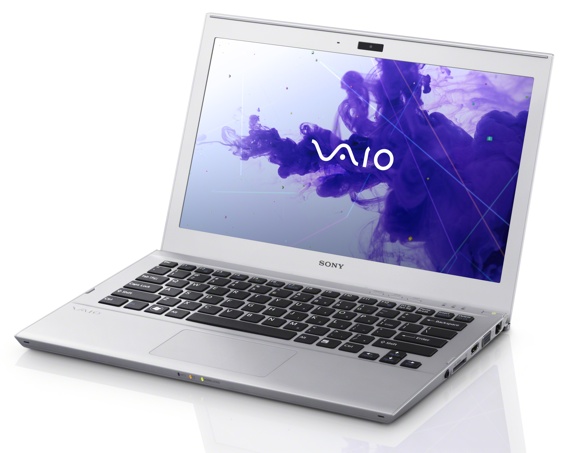
Sony Vaio T

Actually, it's not even Sony's thinnest machine. That honour surely goes to the rather more sexy - but older - Vaio Z, a 16.7mm-think machine that's a wee bit more svelte than the 17.8mm new Vaio T.

The T's other attributes include a 1.4GHz Intel Core i3-2367M CPU, a second-gen part, not Ivy Bridge. There's 4GB of 1333MHz DDR 3 on board, plus a choice of SSD or 320GB 7200rpm hard drive with a 32GB Flash cache.
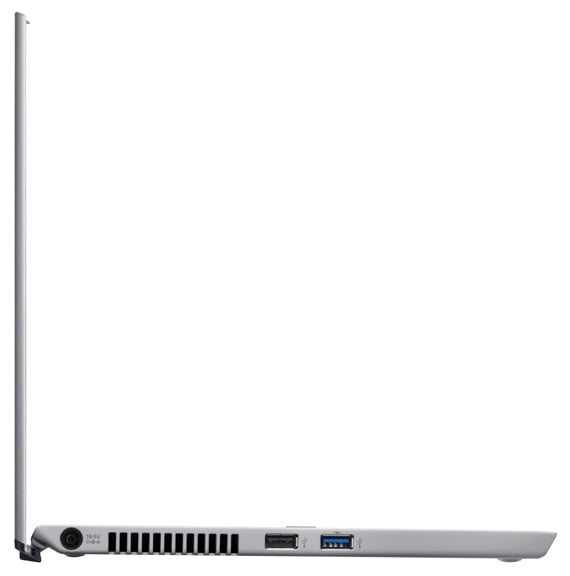
Sony Vaio T

The display is a 13.3in, 1366 x 768 glossy job power by the on-processor Intel graphics.

The T comes with 2.4GHz 802.11n, one USB 2.0 port and a UBS 3.0 jack, and HDMI out.
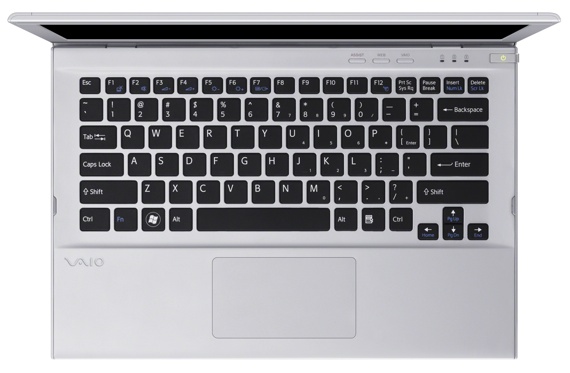
Sony Vaio T

There's no word on precise configurations - or how much they'll cost - but Sony did say the T line will go on sale in June. ®

Re: Sorry Sony. This is not good enough

Because this is Cheap Sony.

There are two laptop manufacturers with Sony in the name, using the same logo and sharing a website: Cheap Sony and Expensive Sony.

Cheap Sony products are exactly the same rebadged plastic crap as all other low-end laptop manufacturers make - Acer, Asus, Lenovo (non-Thinkpad), all that lot. Cheap low-end components, cheap construction, bad screens, bad keyboards. They invariably cost around 5-10% more than their competition and there is absolutely never any reason at all to buy one. If you want a cheap laptop, buy one from one of the other cheap companies and save a bit of money.

Expensive Sony products are actually made by Sony, in Japan, using unique designs and high-end components. They are often very well-made and very good, although sometimes they're just completely weird and pointless - hello, Vaio X and Vaio U, we're looking at you - and occasionally they have actual manufacturing / design flaws. The good ones, like the Z discussed in this thread, really are good, though. The only problem with Expensive Sony products is they're really bloody expensive; the current classic 'Expensive Sony' product is the Z and it'll run you two grand (of whatever currency you prefer, really) at entry level. Even the high-end S models, which are Expensive Sony stuff, are indeed pretty pricey.

If you happen to be rolling in the stuff, though, or work for a company with an understanding purchasing department, there's often a reason to buy an Expensive Sony system. I'm typing this on an entry-level 2009/2010 model year Vaio Z (with 'only' 120GB SSD and a 1600x900 matte screen) I've had for two years (the understanding purchasing department sure does come in handy), and it's _still_ probably better than most newly bought laptops. Can't say that about many two year old computers.

This thing, though, is Cheap Sony all the way and consequently will inevitably be a giant waste of money. If you want a cheapo Ultrabook just buy the cheapest one made by Acer or Asus or whoever, it'll be just as good as this crap.

5
0

Sorry Sony. This is not good enough

Using a cheapo 1366 x 768 screen!

Why don't you put in a decent screen and make your device stand out from the crowd.

You know all the other ones that probably use the very same part number for the screen.

As it stands, this is very much a 'Meh!' 'So?' ultrabook.

Fail for obvious reasons.

6
1

Re: Sorry Sony. This is not good enough

Perhaps they are using a cheapo 1366 x 768 screen because this is targeting the cheapo ultrabook market. This is likely meant to compete with all the other $600-800 ultrabooks. If you want all the bells and whistles they still have the Z series, though it's not officially an ultrabook. But you'll pay for all those bells and whistles and the high res screen.

2
0

Re: Fails the first test.

Number pads on small laptops usually result in:

1. Stupidly small cursor keys

2. Offset touchpads

1
0

Prefer the Z-series

Came with better screens and nVidia graphics. Light machines which run CUDA stuff. Not cheap though. My even older Vaio SZ is still working, and even it can run more (older) CUDA stuff. No Ultrabook ticks that box.

Pity.

Fortunately, there has been a spate of very decent 13" and 14" laptops with nVidia 520 and 540 graphics on board. Cheaper than the Ultrabooks too. So, guess what I will get to replace my crumbling SZ.

1
0

More from The Register

 breaking news
Apple cored: Samsung sells 10 million Galaxy S4 in a month
Beware of South Koreans bearing Android
Microsoft reveals Xbox One, the console that can read your heartbeat
Upgrades Live service – and no always-on requirement
US boffin builds 32-way Raspberry Pi cluster
Beowulf cluster built for the price of a single PC
Review: HP Pavilion 14 Chromebook
All roads lead to Chrome?
Euro PC shipments plummet into bottomless pit of DOOOOM
11th quarter of decline, 20pc drop on last year - Gartner
STROKE this mouse to make apps POP, says Microsoft
Windows 8 Start button comes to Redmond's rodents
Nintendo throws flaming legal barrel at YouTubing fans
All your walk-through vid revenue are belong to us

Hands on with Hyper-V 3.0 and virtual machine movement

Our award-winning Regcasts have teamed up with training provider QA for the deepest of deep dives into Hyper-V, including a live demo.

Understand VM movement - just click to play, or go here for a bigger version.