
Arcam rPac
Sound investment?
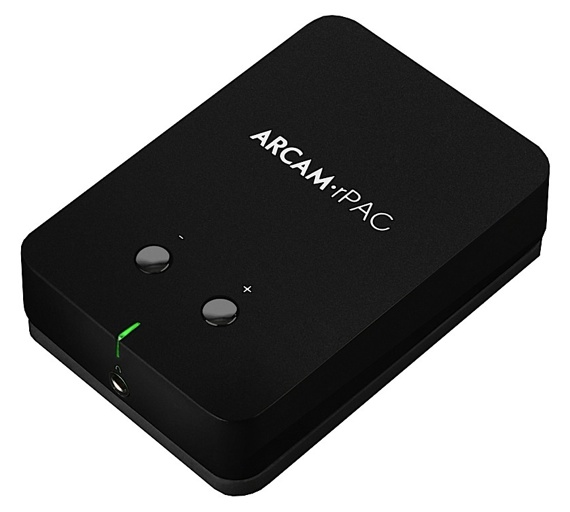
Accessory of the Week Arcam’s rPac is a digital-to-analogue converter (DAC) and headphone amp designed for anyone who listens to music on a computer.
Or, more accurately, anyone who does so and cares about audio quality.
Relying on the computer to perform the digital to analogue conversion usually results in noisy tracks and jitter, thanks to the proximity of the DAC to the rest of the motherboard components and the inaccuracy of its timing.
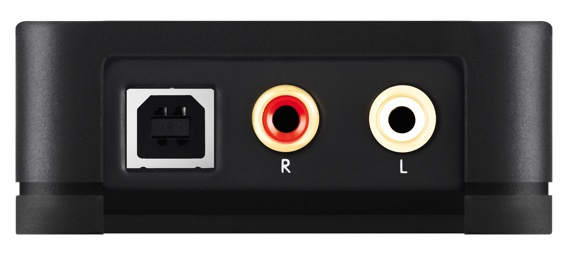
The rPac, a solid chunk of aluminium about the size of a pack of ciggies, uses its own high-end DAC - a TI Burr-Brown PCM5102, since you ask - to convert the 1s and 0s from your computer’s USB port to a clean, jitter-free analogue signal which can then be pumped out through the 3.5mm headphone jack on the front, or the RCA phono outputs on the rear.
Spend some time comparing the audio directly from a laptop with that from the rPac, and the difference is clear. Acoustic tracks like Gretchen Peters’ The Matador have much more detail, and the fuzzbox guitar on the Ariel Pink’s Haunted Graffiti track Butt-House Blondies is transformed from a mushy mess to electrifying excitement.
The 100 x 62 x 25mm rPac is beautifully constructed, and its weight and rubber feet mean it won’t move about on your desk. It comes with USB and RCA cables, and a carry-pouch. Pair it with a decent set of headphones or hi-fi amp, and it’s well worth £150. ®
Reg Hardware chooses its Accessory of the Week every Friday. Got one in mind you want us to consider? Please let us know.
More Accessory of the Week Winners |
||||
iKlip Studio |
Pasce Minirig |
Griffin Reserve |
Arcam rDock |
TDK BA100 |
COMMENTS
Re: The difference is clear?
Sigh, yes. Yet-another audiophile article that ignores quite a lot of science and just asserts something is better because they think it is (and, worse, worth that amount of money to get).
Do a proper double-blind. It literally takes two assistants, a couple of other "convertors" (e.g. laptops / desktops with sound cards that I imagine The Reg has a bucket load of lying around) over and above what you needed to review the product in the first place. It's simple to do. It's HARD to disprove if you consistently pick out one source as the "better sounding", especially if your assistant is an audio engineer with a frequency-analyser tasked with matching all the levels and making sure one's no more bassy or trebly than the other by using only the settings available on the machine producing the sound.
If he can make the sound of a cheap laptop sound "better" to you than this device, this device is worthless and you'd be better off paying him to adjust your cheap laptop instead to get a better sound. If he can't, then this device probably is "worth" having (depending on whether you think £150 for a slightly better DAC is actually worth anything at all).
Seriously, even the most Heath-Robinson of tests would have been SOMETHING. Get the guy sitting opposite you to string the cabling out of the room and then STAY OUT of the room and swap between devices at random (completely at random, roll a dice or something), while recording which ones he swapped in what order. Then have someone in the room with you (who CAN'T see the apparatus and DOESN'T know what order your assistant is plugging them in) to record whether it was device A, B, C or D (that's the only info the plug-swapper can give, ideally by some non-vocal communication like holding up a card or pressing a button) and what you think of it. Only at the end does ANYONE except the guy plugging them in tell you what A, B, C and D actually WERE, and you will NEVER have heard which letter was plugged in at any point.
Over and above average review time? Probably five-ten minutes of explanation and a couple of family members, friends, colleagues, etc. Amount of value added to the review: Some. (i.e. at the moment, there is no value. This would at least add some value, so infinitely times the amount of value currently there).
Re: The difference is clear?
It's always a few factoids, followed by, 'sounded great' well worth the money'. Can't seem to recall a Reg audio review that went along unfavourable lines -
'The Wibwab Smegmatron is an external USB DAC. Sadly, on comparing it the the sound from my laptop, on tracks like Bust my Nads by The Flaming Fartpants, it sounded muddier than a 1980-vintage Walkman with flat batteries. Avoid at all cost and spend the £250 on beer instead'.
As other commentards forcefully replied to my past whinges about these lightweight subjective reviews, 'this is not an audiophile website'. Strangely though, the Reg manages to do objective and informative reviews of cameras.
You don't understand
It's not "a solid block of aluminium". Nor does it cost £150. Therefore it doesn't sound as good.
Re: Don't be too harsh
"If you can get a £10 box of bits and sell it for £150, welcome to capitalism"
Absolutely. But when somebody does sell a £10 box of bits for £150 it is the responsibility of people who know better to point that out. And a reviewer on a techie website should be one of the people who knows better. Writing a fluff piece that gives that £10 box of bits a score of 90% is weak.
The difference is clear?
Did you do a double-blind test? If you knew which device you were listening to, the difference is just as likely to be imagined as clear. Does anyone take this sort of article seriously any more?


