Toshiba readies zero Watt standby mode telly
Hero and zero
With the price of electricity always on the rise, the juice consumed by kit kept on standby can nibble away at the pennies. Now Toshiba has addressed this issue with a new chip said to create standby modes that require no power whatsoever.
Zilch. Zip. Nada.
The first telly to feature the new chip is the 32in Regza 32BE3, which the company reckons uses 27 per cent less power in general than its predecessor.
The telly's power management chip works with a high-capacity capacitor, which stores enough electricity to keep the set's infrared sensor active, while disposing of the need for constant power draw.
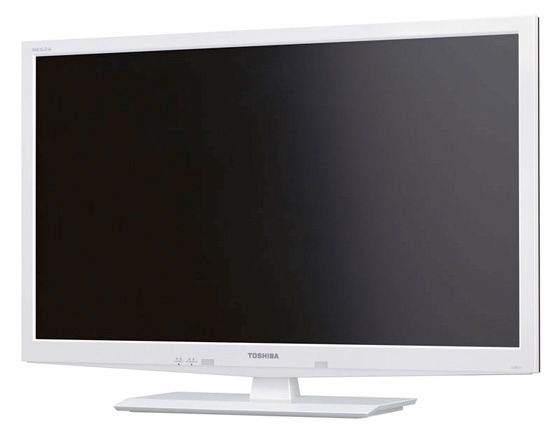
The Regza 32BE3 tackles energy wastage in other areas too, with two backlight modes that cut consumption by 50 and 75 per cent, respectively, by auto-adjusting the light intensity in response to what's being shown (or not) on the screen.
The Toshiba Regza 32BE3 rolls out in Japan sometime in December and will probably make its way over here next year. By which time, of course, leccy prices will have probably risen substantially enough that we still end up paying more regardless.
Then again, a saving of roughly £2 a year was never going to be a major selling point anyway. ®
COMMENTS
You're all missing the point...
...which is that it is actually very hard to design practical low power (microwatt) 50/60 Hz mains ac power converters. There are inherent losses in the rectification, smoothing, and switch mode (voltage change) circuits. At microwatt levels, the losses can very easily exceed the power actually needed by the downstream electronics by 10, 100 or 1000 times. Practical power converters in consumer electronics rarely consume less than 0.3W, the best ones about 0.1W.
The Toshiba innovation is very important. I suspect it will win awards. Parasitic mains power load is all over the place. It is bad in domestic environments but even worse in commercial environments. It is in desk phones, mobile phone charges, network switches, emergency lighting chargers, environmental controls and commercial light fittings (ie with addressable DALI or DSI controls). Everywhere you look there is parasitic load burning 24 hours/day, even when the equipment is not being used or the premises are unoccupied. Most of them are not using the most efficient power converters and will burn ~1W per device. It doesn't sound very much per device, but it adds up. For example, a commercial office building with 2000 lights switched off will be using more power (on that one system) than a house with its lights, PC, refrigerator and TV switched on.
The reason why this is not an issue in automotive electronics is that the system is driven by a low voltage DC source. There is no power converter leaking energy, just the functional electronics of the device itself.
The saving, which in % terms is significant, is that Toshiba have put in a capacitor which captures energy when the appliance is running, and can provide the micropower very efficiently for the relatively large number of hours when it is in standby. So the standby losses go away (not the IR sensor circuit load, which is not the issue). If this is replicated in other consumer electronics and commercial equipment there will be substantial environmental and resource saving benefits.
In conclusion, it's an essential next step.
>Then again, a saving of roughly £2 a year was never
>going to be a major selling point anyway
I don't know. Given the propaganda that has demonised standby mode, and the apparent innumeracy of the public it could be a major advertisable feature!
Juuuust a sec...
"The telly's power management chip works with a high-capacity capacitor, which stores enough electricity to keep the set's infrared sensor active, while disposing of the need for constant power draw."
Where exactly for the energy that capacitor to power the sensor come from, then? Unless they've made a whole new free energy discovery they're not telling us about, it'll have been stored from the mains when the TV *was* turned on.
So while they might be drawing no mains power while the TV's turned off they're not actually using less energy overall; just drawing more off a bit earlier to use when needed.
This.
The point isn't the saving (of either money or power). The point is that standby mode is one of the witches-of-the-moment, one of those things that get unreasonable hatred and incredible misinformation, where people end up sincerely believing that shutting down a LED and an infrared sensor is going to actually have a measurable effect on anything. It is, in short, a very nice marketing target.
Deception of the highest order
Ah, excuse me... 'The Problem' (saving the planet, etc.) is to be found at The Big End of the spectrum. Fiddling with The Tiny End (yes, even phantom power leaks with 24 hour duty cycle) is *extremely* misleading (utter deception). Exactly and precisely ZERO coal-fired power plants will be shut-down by such means. Believing that reducing a TV set's standby power from 1w to less than 1w is an actual accomplishment with any real-world impact is a *serious* cognitive disorder. It's the equivalent of an 8-inch diameter fart-can muffler on a clapped-out $500 Honda. It's a "False Finishing Touch" ™.
