


This article is more than 1 year old
Samsung offers eco-econo green DRAM
It's like making a computer out of rainbows

Using through-silicon vias, Samsung is stacking its memory chips higher and reducing energy consumption.
It has a 32GB double data rate-3 (DDR3) RDIMM (Registered Dual-Inline Memory Module) using these through-silicon vias (TSVs) to build this 3D chip.
The process technology is 30nm and the RDIMM is built from 4Gbit DDR3 memory. Samsung says it is 70 per cent faster then prior quad-rank 32GB RDIMMs, transmitting data at up to 1,333Mbit/s and operational speeds of 800Mbit/s.
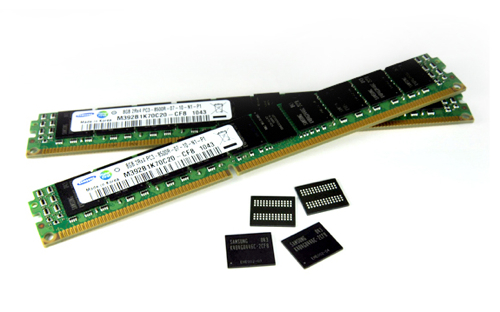
3D TSV 8GB DDR3 RDIMM
The new RDIMM consumes 4.5 watts per hour, which is a 30 per cent saving compared to 32GB load-reduced dual-inline memory modules (LRDIMM).
Typically stacked chips communicate through edge connectors, which widen and lengthen the chips and may require intermediate layers between the memory chip layers. The TSV technology stacks chip layers and sends vertical electrical signals (vias) through the body of the chips using small holes to shorten signal lines and so lessen power consumption. There is also no need for intermediate layers and the chips are smaller in both width and length.
Samsung says the TSV technology achieves high chip density and greater operational speed. Samsung claims the chips use so little power that they have the lowest power consumption level among memory modules adopted for use in enterprise servers.
Engineering samples of the RDIMMs have been made available for evaluation by OEMs. ®
 Biting the hand that feeds IT

