


This article is more than 1 year old
HP TouchPad 32GB WebOS tablet
Cross my Palm...

Review What a difference a year makes. Had HP's TouchPad - which went on sale in the UK this past Friday - debuted 12 months ago, maybe even as few as seven, it would have stood tall alongside the competition.
But coming six months or so after the iPad 2, let alone the iPad 1, HP's offering in many ways feels distinctly behind the curve.
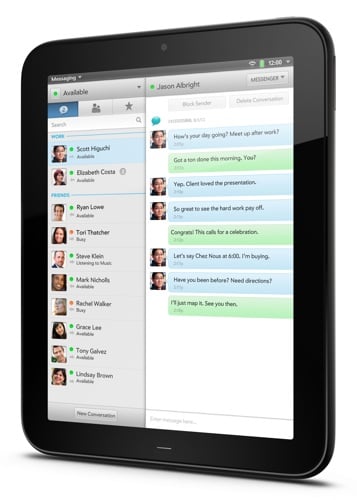
HP's first-gen tablet launches alongside second-gen rivals
That's unfair, because the TouchPad, despite some minor flaws in both the hardware and the software, isn't half bad. It has a functional, aesthetically appealing operating system, and it's a decent piece of work physically.
Yes, it's a me-too product, but then all media tablets are. I don't believe there's a single vendor that can put hand on heart and honestly say it begun work on its fondleslab before Apple launched the iPad - or at least before the many rumours to that effect swamped the internet.
And that the TouchPad feels older than it is, is almost entirely down to the accelerated evolution tablets are undergoing as rivals race to compete, and Apple tries to stay ahead.
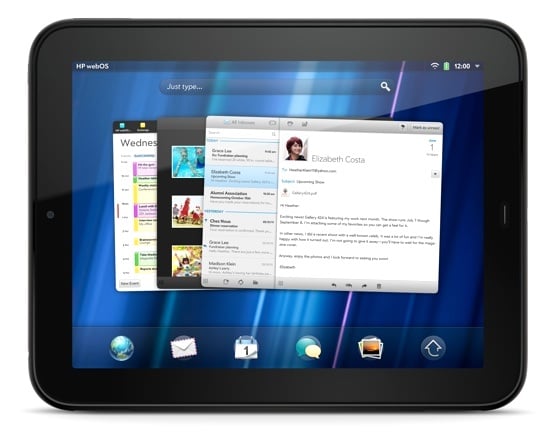
Rotation hesitation: turn the tablet and the screen takes a second to catch up
Lay it flat on a desk and it's a millimetre thinner than the iPad. But its more rounded design makes it feel thicker when you hold it. And that's alongside an iPad 1 - next to an iPad 2 in a shop, no one's going to select the HP over the Apple if size and weight matter to them.
The TouchPad is more me-too so than most. Like the the iPad, it's based around a 9.7in, 1024 x 768 display - a 4:3 aspect ratio, since you ask - a much better choice than the 16:9 widescreen displays everyone else has gone for in a bid to make their offerings appear slightly less iPad-like than they are - and cheaper to make too.
HP was right not to fear invidious comparisons with the iPad. Widescreen is good for watching video in landscape orientation, it's true, but in portrait mode it's too long and thin. The TouchPad's aspect ratio is the ideal balance for a device destined to be used in both portait and landscape orientations.
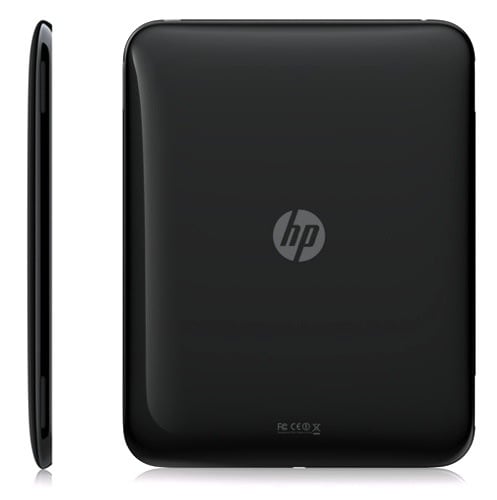
Not as thin as its rivals, but at least there's no pointless rear cam
Like the iPad, the HP tablet uses an LCD screen based in In-Plane Switching (IPS) technology, making for spectacular viewing angles, vertically and horizontally. It's a good looking screen. But it's more reflective than Apple - side by side, with the screens both turned off, the TouchPad makes the better mirror - and it does flex inward when you push it hard.
 Biting the hand that feeds IT

