When chip pins were few and far between
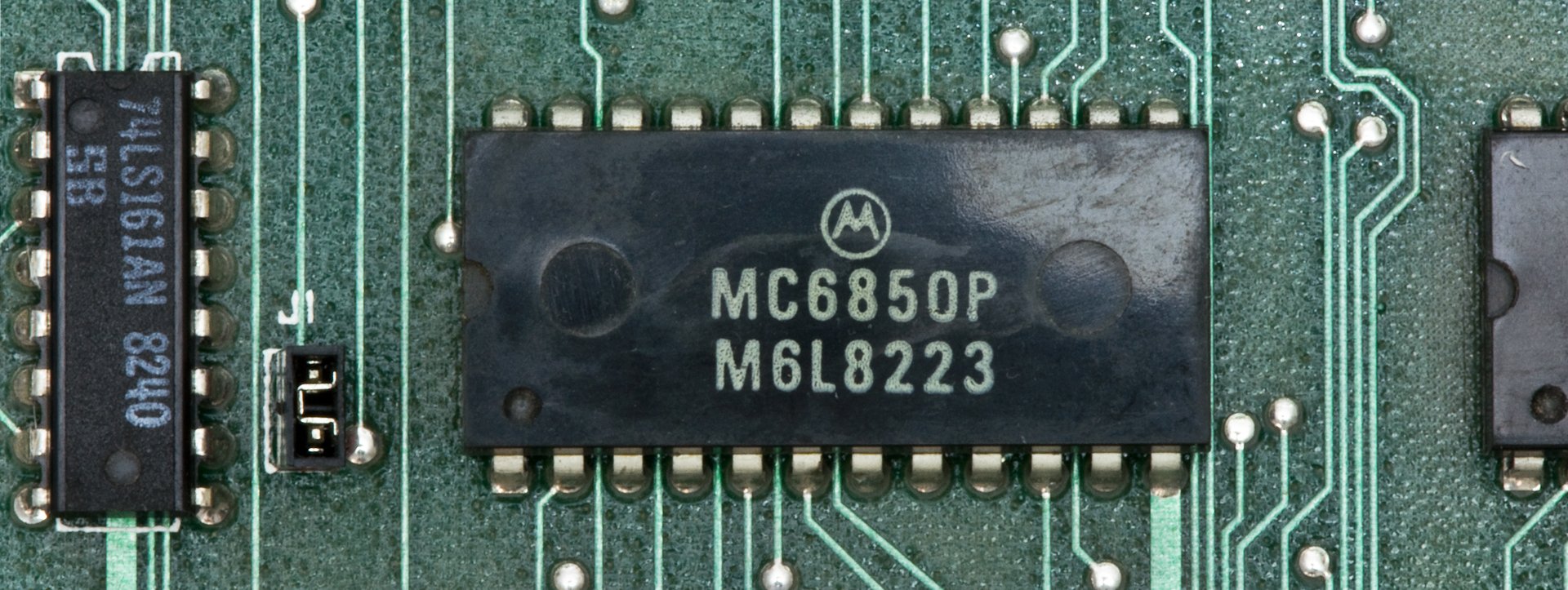
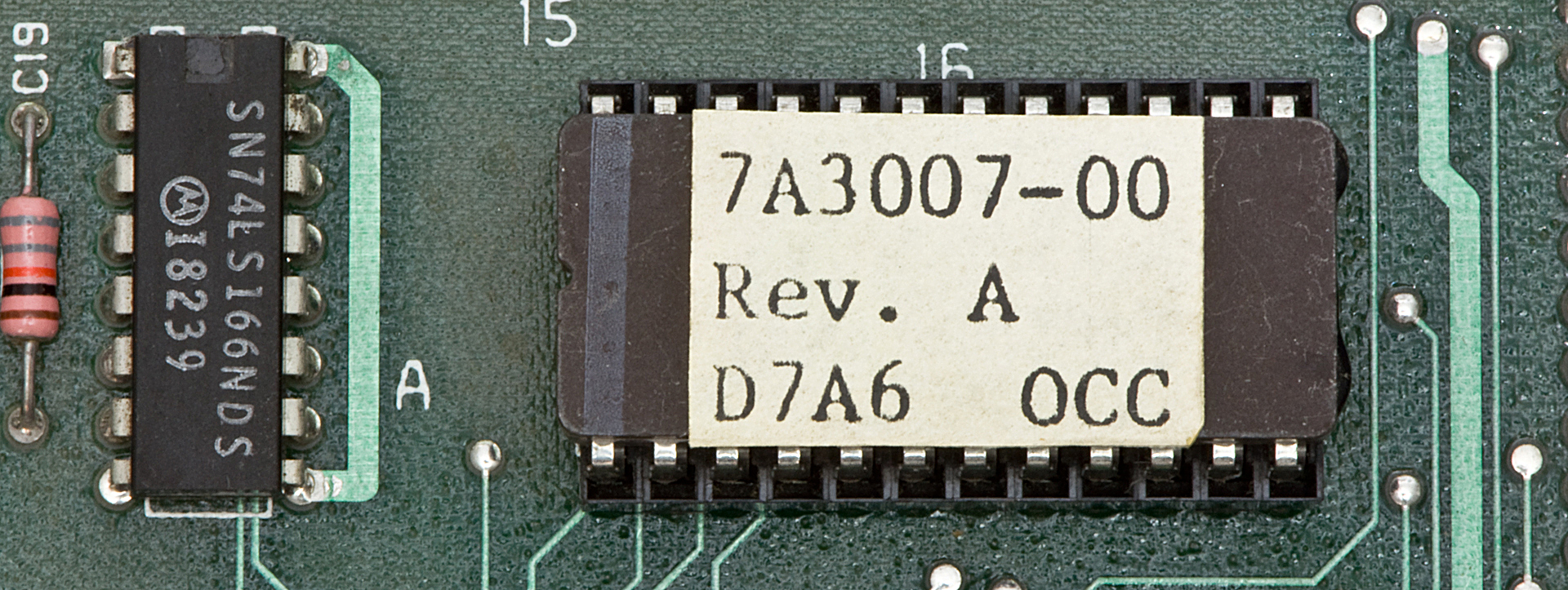
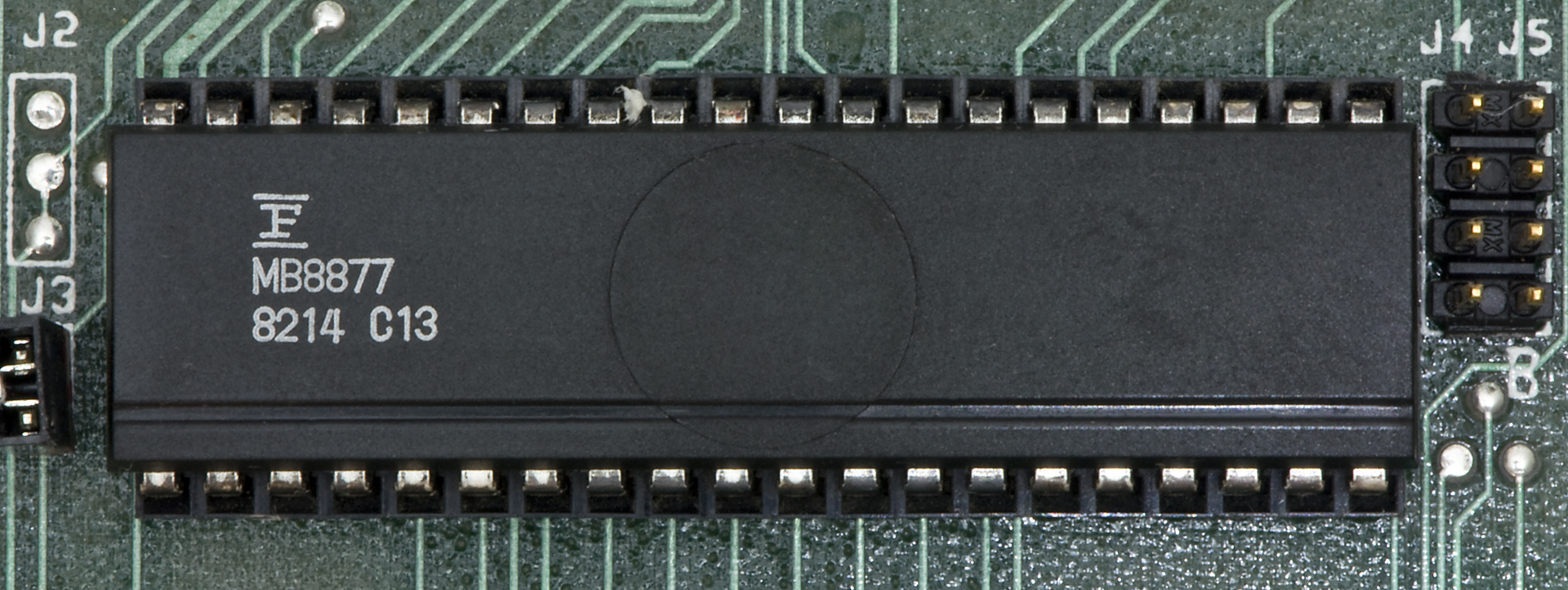
Every time I open up heirloom hardware, I'm always amazed at how few pins that chips had in the early days. And, for that matter, how comparatively huge the pins were in that previous millennium. Take a look, for example, at this close-up of (clockwise from left) the Osborne 1's CPU, one of its peripheral-interconnect chips, and its floppy-drive controller chip:
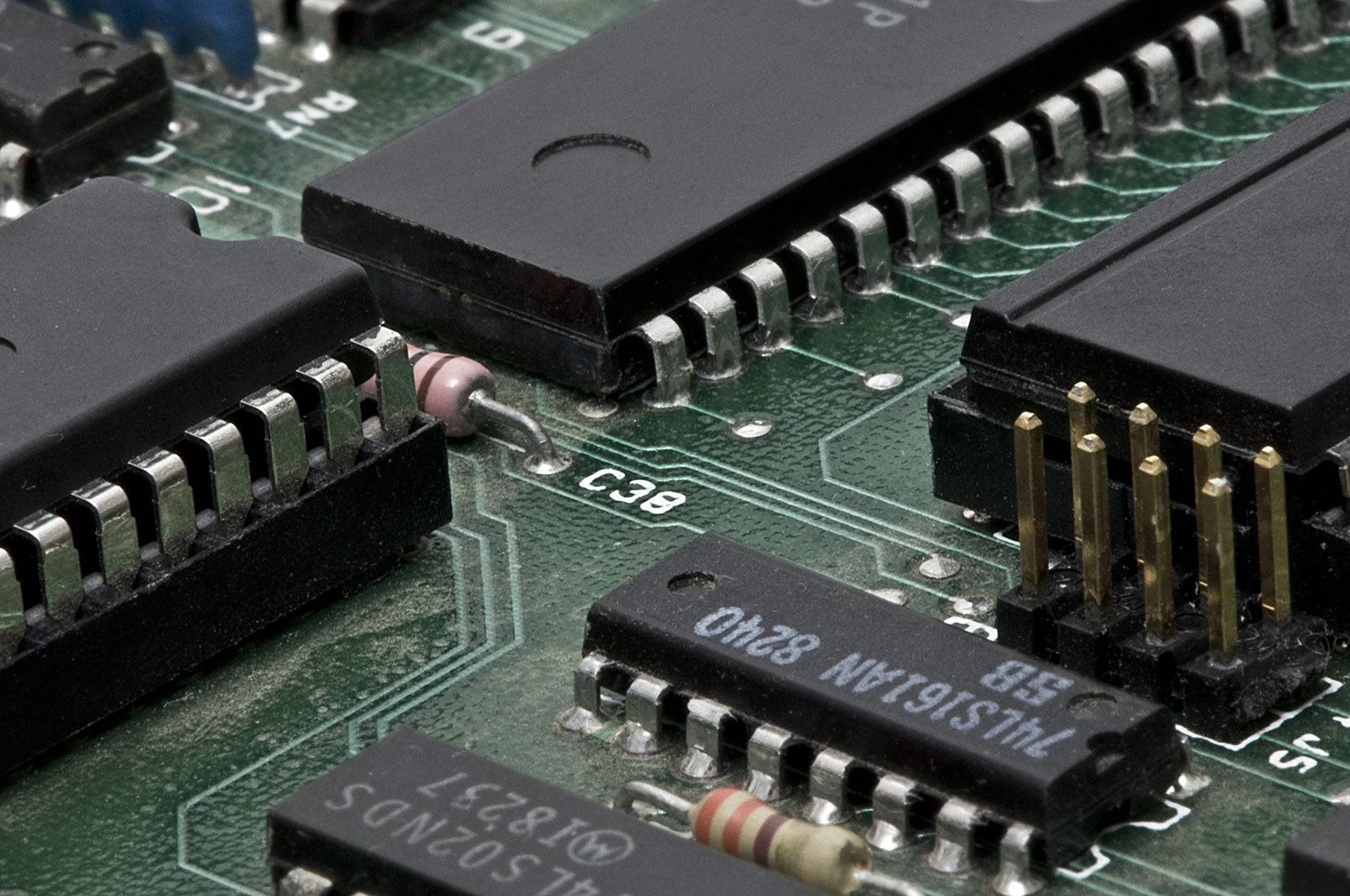
Following the hefty, hefty, hefty theme, the Osborn 1's logic board is not eactly what you might call a marvel of miniaturization at 16.5-by-7.25 inches (41.9-by-18.4 centimeters).
I counted them so you don't have to: the Osborne 1's logic board is home to 107 chips (click to enlarge)
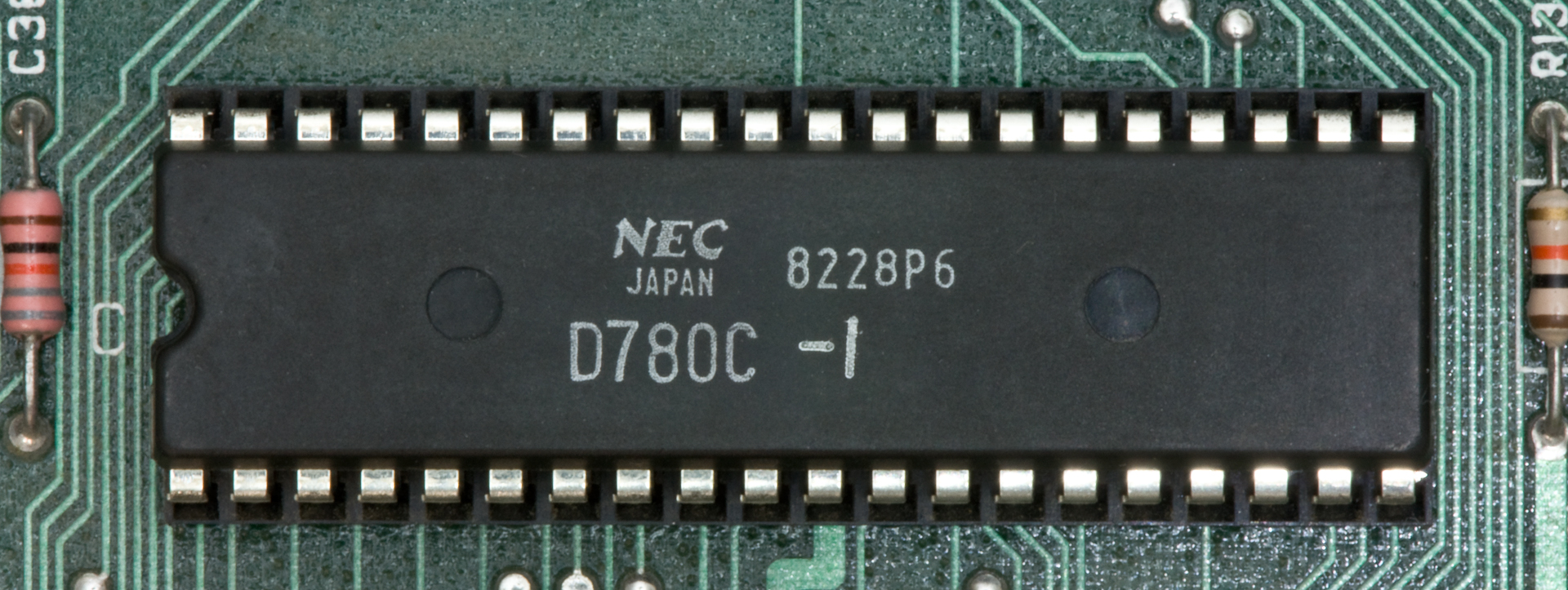
A Zilog-IP NEC D780C-1 Z80 CPU running at 4MHz graces the logic board's center, flanked by two Motorola MC6821P peripheral-interconnect chips.
A Fuji MB8877 floppy-disc controller (well, I believe it's a Fuji – if you know better, let me know) sits above one of the MC6821Ps, and to the right of that same peripheral-interconnect chip squats a Motorola MC6850P asynchronous communications interface adapter chip.
On the far right, occupying a little less than a third of the logic board, is an array of 32 16-pin chips; 27 are AMD AM9016FPCD 16Kb DRAM chips. Interspersed among those AMD chips are five identically sized 16-pin chips, one labled B8226 G and four labled B8229 G.
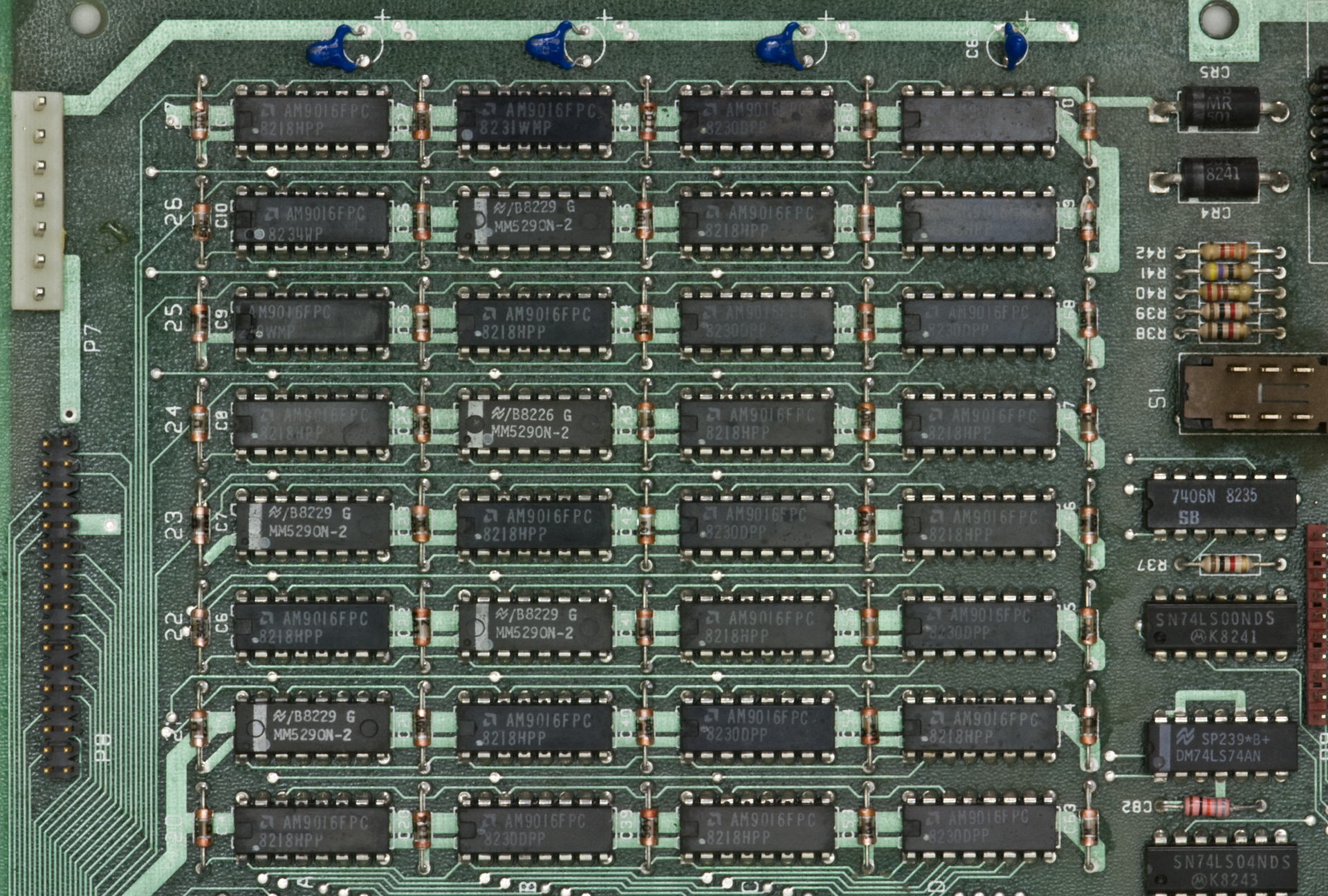
Considering that the Osborne 1 had 64KB of DRAM, I'd bet the farm that those five oddballs are also 16Kb DRAM chips, seeing as how 32 16Kb chips would be needed to provide 64KB of DRAM.
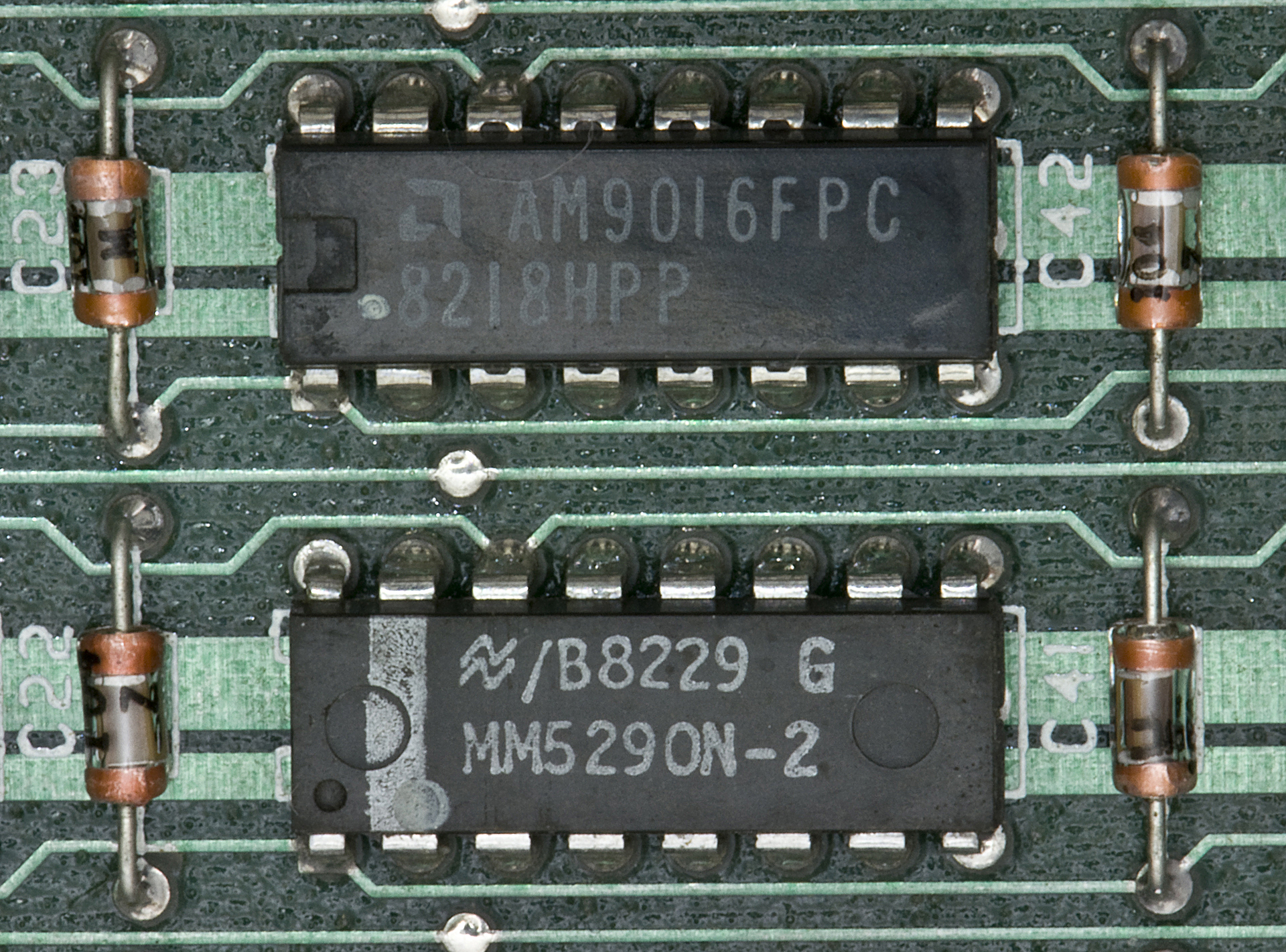
Unfortunately, the only info I could find on the intertubes about any chips labled B8226 and B8229 were a few references to Bay Linear surface-mount, zero-bias Schottky detector diodes – but even though I'm not in the least bit an EE kinda guy, that doesn't make any sense to me.
Next page: Mega-floppies with mini-capacity
COMMENTS
caps
I made that mistake twice myself but it was on the same day. I was examining a power supply with a really big al-elec 200V cap. It discharged on me. After I picked myself up I made the stupid assumption that now that it had kicked my ass it must be fully discharged. It wasn't.
The really amazing fact was....
...that the OS fitted on a single density 5.25 inch disk! What happened? Oh ya M$ happened, now you need >1Tb disk just to get started.
Fond memories
Owned the Rev A myself. And did have the external monitor as well as the 300 baud Osborne pulse dialing modem that fit into the floppy holder slot by the port. The Rev A had double density single sided drives where the original had single density. So everyone cut the notch in their floppies so we could turn them over and use the backside. My Osborne I ran: Turbo Pascal, COBOL, LISP, C, Z80 Macro Assembler in addition to the normal package and the plethora of add ons through the many BBS CP/M sites. At school, armed with a 300 baud modem, I did my mainframe work via Wordstar and uploaded it to save valuable "dollar" allotments on the school's mainframe. I was the envy of my dorm since 128 scrollable display is good enough to display the majority of mainframe output which was formatted for a maximum 132 character line printer. I made my own modifications to OSWYLBUR to handle the strange Osborne I modem... and many of us replace the CP/M shell with ZCPR, a command replacement with more features. I even hacked in a pulse dialing modem routine in place of the built in DIR command, since most people used a directory listing program from disk instead. I also programmed a game using the Software Toolworks C compiler where you flew around the screen and turned asterisks into boxes. The asterisks would kill you if you ran into them and the boxes were like walls, so as you played your ability to move about the screen decreased. What fun! I also wrote a mainframe 370 assembler in macro Z80 assembler. This allowed me to do a lot of my labs without using valuable compute time... just had to upload the final product. In high school, I developed a text adventure game (ala Infocom) where you had to solve chemistry problems to get through obstacles. In my junior year of college I wrote a small BBS in assembler for my Technical Writing class.
Great machine... I wish I had never given it away. It was very useful. It was fun keeping my dorm mates up all night as they listen to my TTX 1014 daisy wheel printer typing away....
It's Easy To Fix
Because, as you have a vertical line, you must have EHT for the CRT which comes from the line output transformer. This means the line output stage is working, its just the line scan coils that are disconnected, that will almost certainly be a dry joint on the PCB where the scan yoke leads connect or possibly at the scan coupling capacitor or line linearity coil. It can't really be much else other than an o/c scan coupling capacitor.
How do I know this? well, the college I worked for had lots of Osbornes and I used to repair them when they broke down. Most common fault was the extension card for the double density floppies working loose (these things were carried between rooms regularly which probably explains that), next was the display which could fail to work due to dry joints at the line output transistor connections or by the vertical line due to joints as described earlier.
Once I had to make a new system rom for one (by copying a good one from another machine) as the suspect one was partly corrupt (would boot to the Osborne startup screen but would intermittantly fail to load the o/s from disk) -- that took a while to diagnose.
One other task I had to do was calibrate all the floppy drives so that disks were interchangeable between all machines -- there were quite a few that would not reliably read disks from other machines until this was done.
Most of our Osbornes worked with external monitors (to ease eyestrain on the students).
When carrying machines between rooms I always carried two at a time, that way both arms stretched by the same amount :-) happy days indeed.