


This article is more than 1 year old
Multi-colour e-ink to splash down in six months?
Red and yellow and pink and glee (eventually)

Fujitsu's FLEPia screens, which were already available a year ago, do work another way, using three layers to reflect one colour each:
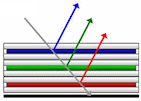
Pushing light through all those layers makes for a dull screen
That's great, but the light loses a lot of brightness going through all those layers, and having to refresh each layer separately makes pushes the latency up to eight seconds (yes: in full-colour mode the FLEPia screen can take eight seconds to redraw).
Which brings us to Mirasol: Qualcomm's technology which in the last year has moved from a concept, to prototypes, to production, with a device announcement from an unnamed partner promised at CES in January. Mirasol uses the same sub-pixel technique as E-Ink, but instead of black beads in white goo it changes the distance between a mirrored plate and colour filter to trap light of the wrong wavelength:
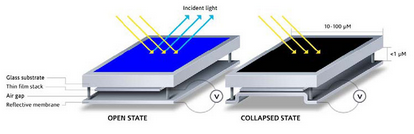
This is a blue pixel, obviously
So instead of being reliant on the reflectivity of the white goo, as the Triton screen is, Mirasol is as bright as the mirrored surface underneath is reflective. Not only that, but because it moves plates up and down, rather than shifting beads suspended in goo, it has a much higher refresh rate that enables it to comfortably show video while still consuming a fraction of the power used by a traditional screen.
We've seen a Mirasol screen in action, several times, and it's bloody impressive; but with the prototype more than a year old it's not clear why we don't already have Mirasol displays yet.
Qualcomm hasn't explained, though it has started manufacturing 5.7-inch screens, presumably at the behest of that unnamed partner. 5.7-inches isn't going to give the iPad any cause for concern, and if the technology is as scalable as Qualcomm keeps telling us it is (ideal for Tvs, and all sorts, we're told) then why start with such a small size?
It seems likely the problem is price, which may trump contrast and refresh rate as the most important factor affecting colour electronic ink. Improvements in LCD technology, and better batteries, are pushing electronic ink aside in tablets, and starting to push into electronic book readers too.
The promise of a screen that consumes no power and when idle, and has no flicker, is attractive, but making users pay for it is another matter entirely. So if you want colour in your e-book then you'll have to pay for it, or just buy a LCD tablet and read in the dark instead. ®
 Biting the hand that feeds IT

