Toshiba outs no-glasses 3D LED TV
OLED over again?
Toshiba has taken the wraps off what it claims is the "world's first" 3D TV that doesn't foist special glasses on its viewers.
Today's announcement confirms past reports that the company plans to release such a set this year - despite industry scepticism. The two models unveiled today will be out by the end of December, Toshiba said, but only in Japan.
Buyers there will get a choice of two models in the Regza GL1 series: one with a 12in screen, the other with a 20in panel. Both use the PS3-derived Cell CPU to handle picture processing.
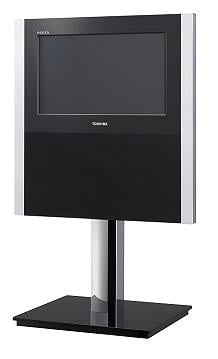
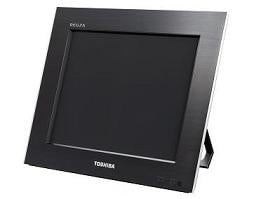
Toshiba's Regza 20GL1 (left) and 12GL1
Such small screen sizes are a sign that the technology is in its commercial infancy. Remember, the world's first OLED TV, Sony's Xel-1, was only 11in. Also as per OLED, prices of glasses-less 3D TVs are likely to be high. No wonder, Toshiba simply said the price will be open to retailers to set.
Toshiba isn't right to say the GL1s are the first of their kind - other companies have demo'd such sets before, but commercial pressures ensured that they never came to market.
These screens are complex - Toshiba's 20in set, the 20GL1, has 829m pixels, four times the pixel count of a 1920 x 1080 display. That said, its 3D image resolution is limited to 1280 x 720. It can combine and display nine parallax images carrying information from nine images created in real time from a single frame, it said. The screen has 1440-LED backlight array.
The 12in model, the 12GL1, has a 1.5Mp screen and a 466 x 350 3D picture resolution.
There's no word yet when these boys might appear over here. ®
COMMENTS
Wow
Just wow.
Combine this story and this story http://www.theregister.co.uk/2010/10/04/liquid_galaxy_open_sourced/ and an Xbox / Kinect hooked up to FIFA11...
A few musings:
Nexox Enigma: Don't forget that a single Computer Pixel is actually made up of 3 LED pixels (R/G/B), so a screen resolution of 1920 x 1080 would require 6.2m physical pixels.
Still quite short of the ~223m pixels required by the article, though.
BTW: local information prices the 12in model at ~AUD14,000 (or, erm... 5,600 pounds?)
Seems like too many pixels...
"""These screens are complex - Toshiba's 20in set, the 20GL1, has 829m pixels, four times the pixel count of a 1920 x 1080 display. """
Some quick estimation tells me that a 1920x1080 screen should be around 2 mpixels, so your report of 829mpix might be off by a few orders of magnitude?
Too bad it'd got that massive chin thing attached, quad HD in a 20" would go great on my desk... Or a pair of them, rather.
Tomorrow's World?
I seem to remember in the late 80s or early 90s a demo on BBC Tomorrow's World, of "no glasses" 3D.
Or does my memory serve me wrong?
I blame the tablets...
They work like the glasses.
Both techs try to shoot differing images to each eye. With the glasses, they shoot both pictures at once and let the glasses (either through shutters or polarization) sort them out. Without them, they send the images at highly-focused angles so that, in the right positions, each eye sees the proper image. That said, either tech could still play hobnob with your head for the reason you describe. The sense of depth is *forced*, for the most part. In a proper 3D scene, the eye can naturally focus to whatever depth we desire. For example, we might focus on something in the distance and the close-up stuff blurs. We refocus close-up, and the reverse happens. That doesn't happen with either system. For many people, the brain notices this lack of accommodation and "can't compute." The result: a headache not unlike what happens in the initial bouts of motion sickness.
