3D TVs
Fad - or the future?
Group Test It’s been hard to escape the 3D frenzy that was kicked off when Avatar took the box office by storm last Christmas. The recent remakes of Clash of the Titans and Alice In Wonderland got hasty 3D makeovers in order to cash in on the craze, and you can’t open a newspaper or a web browser without being deluged by headlines proclaiming that ‘3D is the future of cinema’.
Of course, Hollywood has often dabbled with 3D in the past so it’s easy to dismiss the current mania as just another marketing gimmick. However, there are other factors driving the adoption of 3D this time around.
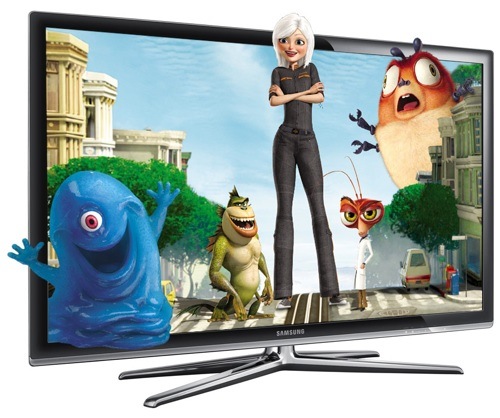
The technology now exists to bring 3D into your living room for the first time, and all the major TV manufacturers are launching 3D-capable TV sets in the next few months, along with a new generation of 3D-capable Blu-ray Disc players.
Sky’s getting in on the act too, initially with 3D sports broadcasts to pubs and other public venues, and then with a dedicated 3D television channel for its domestic service later this year.
It could all turn out to be a rather expensive fad – although we’ll admit that the technology works better than we’d expected. Either way, here’s all the info you need to make up your own mind about the current 3D phenomenon.
In this group test, I'll be looking at the following sets:
Incidentally, LG gets in twice because it's taken the unique approach of releasing TVs based on both of the two key 3D technologies, so I looked at examples of both its passive and active 3D tellies.
Next: 3D TV Buyer's Guide
COMMENTS
All I can say is WOW!
To think, the world made it to 2010! FINALLY we have 3D in the Living Room* and frakkin' VIDEO CALLS on a MOBILE PHONE!!!
The future is here! Whatever next? Horseless carriages? The sky's the limit!
*old comics/ album covers / movies from the 60's-90's don't count, because you still had to wear those stupid glasses. Wait...what?
Paris, because any perceived depth is an illusion.
Already possible with CRTs
LCD shutter glasses and the like work very well with regular CRT monitors. You can either drive the glasses with a pass-through adaptor that sits between the device generating the video signal and the display (used for watching stereoscopic VHS/DVD for example) or have the device generating the video signal drive the glasses too (Segascope 3D on the old Sega Master System did this). You don't need a special TV set.
The reason this works is because a CRT will display image data as soon as it receives it. When the device generating the video signal sends a scanline to the display, that scanline is shown on the display. An LCD (or other modern flat panel display) may store a frame of data in memory and not actually display it until the whole thing has been received (incurring a delay of at least one frame). This delay becomes worse in sets that perform additional processing of the input signal, and is the reason that rhythm games have a configuration screen that lets you compensate for the lag between the picture and the sound. As the picture on the screen is no longer in sync with the signal being fed into it you can no longer accurately alternate between the sending images to the left or right eye.
If you hunt around online you'll find a variety of circuits that can be knocked together at home to drive LCD shutter glasses. I use such a circuit with an old 17" CRT and some £11 LCD shutter glasses I acquired on eBay to great effect.
3D for games?
I find it interesting that there's no mention of 3D for the games industry here. Personally I feel this is far more likely to drive the adoption of this technology among consumers than the odd half-decent 3D movie.
I didn't buy my HDTV for HD programming; this is merely an added bonus compared to the joys of the HD game :)
Memo to tv-manufacturers
Get back to me when we are talking about genuine holographic projection and no stupid glasses. Until then there is not a frakking chance I am going to part with any of my hard earned for poorly realised erzatz versions that either involve glasses and blinding headaches after twenty minutes or so or the so called "glasses free" 3D where there is one sweet spot directly in front of the telly with a viewing angle of roughly plus/minus 5 degrees. Until then not even Cameron's "Dancing with smurfs" (which I quite enjoyed actually) could pursuade me to part with one mother loving penny.
@ Home?
Why would I want to wear glasses @ home just to watch some TV? In a cinema is one thing but I have less than 0% interest for that while relaxing @ home...
