The Register® — Biting the hand that feeds IT

Feeds
50%
Acer 5738DZG

Acer Aspire 5738DZG 3D 15.6in notebook

World's first 3D laptop – are the specs up to it?

  • print
  • alert

Agentless Backup is Not a Myth

Review Despite its obvious appeal, 3D hasn’t really taken off as far as computers are concerned. However, things seem to be picking up pace of late, and Acer is the latest to get in on the game with what it claims is the world’s first 3D-capable laptop.
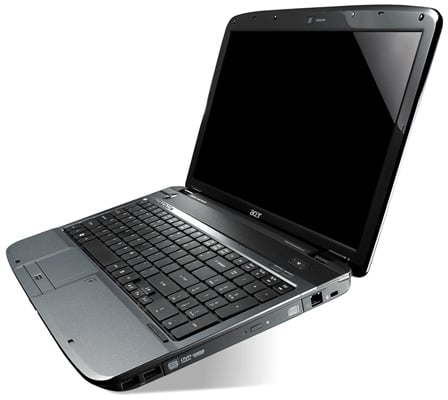
Acer 5738DZG

Acer’s Aspire 5738DZG: 3D comes to the laptop

Before delving into Acer’s wonderful world of 3D, it’s best we give you a quick overview of the Aspire 5738DZG. It’s a good looking piece of kit that’s built around a 15.6in screen and weighs in at 2.8kg. The usual array of ports are dotted around the chassis, including HDMI and four USB, while the keyboard features a low-profile design and includes a numeric keypad. Windows 7 Home Premium is the operating system of choice, and Acer’s gone for the 64-bit version.

Our review sample was powered by an Intel Core 2 Duo P7350, but it later transpired that the Aspire 5738DZG actually comes with a far less-powerful Intel Pentium Dual Core T4300 – more on this later. Memory sits at 4GB, while graphics are taken care of by an ATI Mobility Radeon HD 4570. Other features include 802.11n wireless, Gigabit Ethernet and a multi-format card reader. Thanks to the 500GB hard drive, there are no problems in terms of storage space.

We’ll take a closer look at the laptop’s performance in a moment, but first it’s time to get down and dirty with the 3D side of things. Nvidia’s been making plenty of 3D noise of late with its 3D Vision Kit, which retails for around £115.

Instead of using the traditional anaglyph method (think red and green filtered glasses), Nvidia’s solution is to use powered glasses that have the ability to rapidly shut off the left and right eyepieces in turn. When viewing the right kind of image on screen, this shuttering is timed to coincide with individual video frames, providing the left and right eyes with slightly different images and thereby producing a 3D effect.
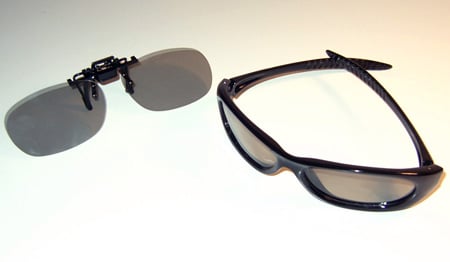
Acer 5738DZG

Speccie tech: two pairs of polarised glasses are supplied

It’s by no means a new method – some of you may remember the Elsa 3D Revelator glasses that appeared back in the 90’s – but it has a major drawback in that it requires a 120Hz monitor in order to deliver a smooth 60fps for each eye. And with only a couple of 120Hz TFTs currently available, there’s a good chance you’re not using one at the moment, which means splashing out on a new screen.

Customer Success Testimonial: Recovery is Everything

Let the Porn flood begin...

As usual it''ll be sex that'll makes it sale...

1
0

First?

I recall reading an article on the reg in '04 about a Sharp 3D LCD screen. only problem was the weak notebook it was attached to made it uninteresting and too expensive.

1
0

Sharp RD3D

and the Sharp Actius AL3DU both had autostereoscopic displays using lenticular lenses- you get glassesless 3D at the expense of half of your horizontal resolution.

Any non-autostereoscopic attempts to make true 3D available in real life will be stymied by the need for glasses. Anaglyph is utter crap and useful only as a way of describing how stereoscopy works. 60Hz displays (i.e. what each eye gets with a 120Hz display & shutter glasses) give you a headache. Polarised glasses requires two displays, so it's rather more expensive to build the display (though probably the cheapest way of building a DIY 3D display) and unless you've got circular-polarised screens (like the RealD system in cinemas) the effect can be thrown off by tilting your head. Head Mounted Displays by definition require headgear.

Autostereoscopic displays will become more useful (a) when there is a cheap DIY way of building them and/or (b) when large OLED or similar displays become more affordable (they've got potential for hugely increased resolution-per-square-inch (put 4x ~0.5" eMagin OLED displays next to each other and you've got a just-over-1" 1600x1200 pixel display!) so you can have a "proper" resolution in both 2D and 3D).

Anyone who asks "what's the point" clearly hasn't used 3D!

0
0

More from The Register

First look: iOS 7 for iPad
No, Apple hasn't released it yet, but that doesn't stop intrepid devs
Samsung Galaxy Note 8: Proof the pen is mightier?
Sammy’s iPad Mini killer has a stylus to stab other rivals too
 breaking news
Curtain drops on Apple Store ahead of WWDC: What lies behind?
Steve Jobs watching from on high. No pressure, lads
 breaking news
Cold, dead hands of Steve Jobs slip from iPhones: The Cult of Ive is upon us
Billionaire biz baron's death clears way for uber-shiny iOS 7
Airbus imagines suitcases that find themselves
Point your mobe at your smalls to track their every move
Surprise! Intel smartphone trounces ARM in power trials
Tests show equal performance while sipping significantly less juice
Microsoft lures buy-curious vixens, corduroys with a cheap fondle
Surface slab sales latest: Will no one rid Ballmer of these turbulent tabs?
Apple said to be 'exploring' 5.7-inch iPhone
Who's the copycat this time, Mr. Cook?
Google Chromebooks now in over 6,600 stores
Major, worldwide retail push begins this summer
Samsung plans LTE Advanced version of Galaxy S4
1Gbps download capability could stiffen drooping S4 sales forecasts