The Register® — Biting the hand that feeds IT

Feeds

Intel punts portable text reader for the blind

Point, shoot, listen

Intel has introduced a handheld device designed to help dyslexic, low-vision, and blind persons by using a combination of a point-and-shoot camera and text-to-speech technology to read text that for them would otherwise be difficult or impossible to comprehend.

The Reader has a list price of $1,499. The user points the device's five-megapixel, autofocus camera at a document, book, or sign, snaps a photo of it, then listens to the text spoken by what Intel describes as a "lifelike" male or female voice over either the device's speakers or through headphones. Alternatively, low-vision users can view text at variable levels of magnification on the device's 4.3-inch (10.9cm) 16:9 LCD display.

About the size of a hefty paperback, the reader measures 6.5 by 5.35 by 1.3 inches (16.5 by 13.6 by 3.3 centimeters) and - including a removable battery with a four-hour lifespan - weighs 1.38 lb (.63 kg).
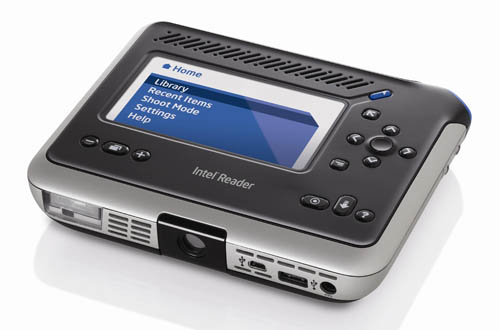
Intel Reader

The blind can listen, the vision-impaired can read magnified text

The device can also play talking books in the DAISY (digital accessible information system) format, as well as what Intel describes as "a variety of other audio files," uploaded over USB using the Reader's USB 2.0 type A or Mini type B ports. In addition, the Reader can convert text into MP3s to be played on digital-music players or PCs.

Powered by an Intel Atom processor, the Reader includes a 4GB SSD, about 2GB of which can be used for user data. An on-board buffer can hold up to 20 pages before processing them, and it can store up to 500,000 text-only pages or 600 pages containing both text and images. Books can be scanned with an optional $399 Portable Capture Station, which positions the reader above a book-holding platform.

The Reader was developed by Intel's Digital Health Group based on an idea first developed by that group's director of access technology, Ben Foss, who is himself dyslexic. In a statement, Foss said: "It is important to remember that a central experience of a disability, and especially a learning disability, is loneliness."

The Reader aims to help alleviate that isolation - and, by allowing vision-impaired users to read personal documents without the help of others, to protect their privacy, as well.

Foss notes that "Some people with disabilities can do great things, and some people cannot. But we are trying to level the paying field so that people with disabilities can determine this for themselves." With any luck at all, as the Reader reaches maturity, the price for it and its follow-on updates will drop enough to level that playing field to include vision-impaired users without deep pockets.

The Reader can be ordered today in the US from vendors such as CTL, Howard, and Don Johnston, and in both the US and UK from HumanWare, a member of the DAISY Consortium

A video demonstrating the Intel Reader as used by dyslexic, low-vision, and blind users can be viewed here. ®

Latest Comments

@robert e harvey

My totally blind mother already uses a similar system installed on a Nokia N82 phone. This system actually tells the person holding the phone whether or not a document is in the viewfinder and at what angle the image is oriented.

The photograph taken with the camera is stored as a pdf and then read back through the KNBF reader software via Nuances voices, which incidentally includes a range of English voices.

0
0

There's a lot happening in this market.

As stated above a very low percentage of 'blind' people have zero vision, so pointing at signs isn't out of the question. Even those with no vision can line up on a book or label by touch. With headphones you might also be able to use it on cash machines, with a bit of practise.

On the copyright issue, this area is a bit different. For personal use I believe there's an exemption for making braille and large print copies of material you own. I've never looked into whether this stretches to electronic copies, but I'd guess it does.

I've had a lot of success with using a mobile phone camera + digital zoom as a magnifying glass when I've forgotten the old reading glasses, so I'd guess with modern smartphones having such powerful processors, some of this application could be coded for existing handsets. All you need is an acceptable quality camera.

0
0

@ Not Fred31

I wonder how that would fare under the Disability Discrimination Act? Would that count as copyright holders discriminating against people with a disability by blocking their access to goods and services?

In the same way that a library would have to put in a ramp for wheelchair users...

Just a thought.

0
0

Unauthorised copy of the text?

Under existing copyright legislation, this would be a device for unauthorised copying of the text. As the European Publishers' representative said in the European Parliament yesterday... "some books are meant to be audio books and others are not" - hence the need to get people to pay again for books they have already been paid for, if they use a device to read the book out loud.

0
0

@Robert E A Harvey

Indeed as already said it's aimed at people with (very) poor eyesight rather than the totally blind. Having said that, every time I see a device like this I think back to the `Not The-Nine'O'Clock News` sketch where they design a flashing light attachment to help deaf people see the phone ringing.

0
0

More from The Register

Microsoft reveals Xbox One, the console that can read your heartbeat
Upgrades Live service – and no always-on requirement
 breaking news
US boffin builds 32-way Raspberry Pi cluster
Beowulf cluster built for the price of a single PC
Review: HP Pavilion 14 Chromebook
All roads lead to Chrome?
Euro PC shipments plummet into bottomless pit of DOOOOM
11th quarter of decline, 20pc drop on last year - Gartner
Fairphone goes on sale to all
The Android handset that's PC can be yours
Nintendo throws flaming legal barrel at YouTubing fans
All your walk-through vid revenue are belong to us
HTC woes prompts 'leave now' tweet from former staffer
Chief product officer latest to bail from sinking mobe-maker