The Register® — Biting the hand that feeds IT

Feeds
90%
Patriot Torqx SSD

Patriot Torqx 128GB SSD

The new solid-state speed champ

  • print
  • alert

Review Patriot’s first stab at a solid-state drive went by the name of Warp and used the oft-derided JMicron 602 controller. By contrast, the new Torqx series of SSDs makes the switch to the Indilinx Barefoot controller that so impressed us when we reviewed the OCZ Vertex.
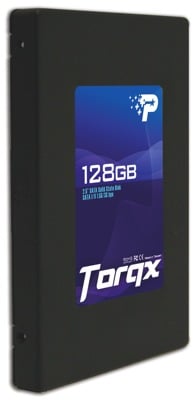
Patriot Torqx SSD

Patriot's Torqx: based on Indilinx' nippy new controller

From the outside, the Torqx looks reasonably funky. It follows the standard notebook 2.5in form-factor and has a two-part metal casing with a stainless steel base and a brushed black aluminium cover. We popped open the Torqx and immediately felt a sense of déjà vu as it looks identical to the Vertex.

We understand that the Indilinx reference design is fairly prescriptive so the controller goes HERE, the 64MB Elpida cache goes THERE and the 16 Samsung MLC flash memory chips are arranged with eight chips on the front of the PCB and eight on the back JUST SO.

Patriot has chosen to use a blue PCB instead of the green one favoured by OCZ. The casing is Patriot’s own but those are minor cosmetic points.

The specification of the hardware is effectively fixed by the choice of the Indilinx controller, so Patriot’s input comes down to the contents of the package, the firmware and the price.
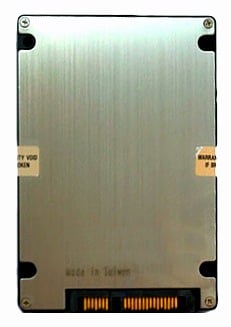
Patriot Torqx SSD

Could be any make of SSD, this way round

The package is fairly basic and consists of the Torqx drive in one clamshell casing and a 3.5in bracket for mounting the Torqx in your desktop PC in a second clamshell. Pricing is relatively steep and we found the 128GB Torqx on sale for the same price as the 120GB OCZ Vertex: just over £300.

Latest Comments

That firmware upgrade process.

I can see a rather large flaw in there.

Say you want to run install one in your shiny new build as the main disk rather than as additional storage. So you just need to boot into Windows and..........ah..........oh dear.

OCZ have the right approach with a bootable CD image, if they could just get it to work. Did you try the jumper trick with the OCZ CD boot? I'm wondering if the problem's a screwup in the instructions....

0
0

I second price fixing!!!

@ JC 2:

I second that! This is very similar to most new pieces of technology on the market nowadays - there seems to have been a decision taken by these companies that every new iteration of a certain technology warrants a higher baseline price-point than the previous technology.

This leaves the newer technology at a higher price point to older technology regardless of how long its been on the market, and the end result is more money in their coffers no matter when you buy it. Games consoles are one clear case; flat-panel TVs are another. They just won't go below a certain price point any more and that really is bad for lower-level uptake of these technologies..

Shame that really, as mainstream adopters will hold out or save and not produce the sort of product churn that actually drives sales.

SSDs really should by now have eliminated the need for a mechanical main/system drive in any personal computer needing 120GB or less - leave the mech DDs to work as storage-only or as part of elaborate raid arrays where cost and reliability are still a factor.

0
0

Benchmarks Don't Back Conclusion

Besides low latency, the testing showed them performing fairly poorly. The BEST result for the 2GB file transfers, a fairly undemanding linear process, was 30.3 seconds. That's 68MB/s.

Today's 500GB per platter, _5200RPM(even!)_ mechanical HDDs can achieve that (for more than the first 128GB of their outer platter capacity) or come pretty close to this average for the rest of the platter(s), and give it to you at about $90/TB.

As first mentioned, this does not consider latency so it's an apples:oranges comparison but I have to agree with the article that there is little reason to buy this late entry into the SSD market, at least it uses the Indilinx controller but SSD prices should be going down not staying the same with more market competition, let alone the doubling of flash density.

I suspect price fixing in the flash market. We saw DDR2 for under $1 a chip, even practically free when on a finished product with a rebate, when capacity was focused on DDR2 production. Now that more capacity switched to flash production the cost of flash should have similarly decreased.

0
0

SSD reviews

Couldn't they all be boiled down to the same conclusion?

"X is very similar indeed to ... other SSDs on the market. It performed very well. Shame it couldn’t be just a bit cheaper."

0
0

More from The Register

US boffin builds 32-way Raspberry Pi cluster
Beowulf cluster built for the price of a single PC
MYSTERY Nokia Lumia with gazillion-pixel camera 'spotted'
With 20Mp sensor - NOW will you try Windows Phone 8?
 breaking news
Review: HP Pavilion 14 Chromebook
All roads lead to Chrome?
Borked your iDevice? Pay EVEN MORE to have it fixed by Applecare
Or scream at their hapless techies on their forums
Dell's PC-on-a-stick landing in July: report
Wyse up, suckers, could this be a new set-side-stick?
Euro PC shipments plummet into bottomless pit of DOOOOM
11th quarter of decline, 20pc drop on last year - Gartner
Nintendo throws flaming legal barrel at YouTubing fans
All your walk-through vid revenue are belong to us
Report: AT&T dropping Facebook phone after dismal sales
Turns out folks won't buy that for a dollar