Adventurer demands -70°C phone for next expedition
Sonim pledges suitably chill-resistant handset
Aging adventurer Sir Ranulph Fiennes, 65, has hinted that rugged-phone firm Sonim is working on an ultra-hard handset ideal for use on his next jaunt.
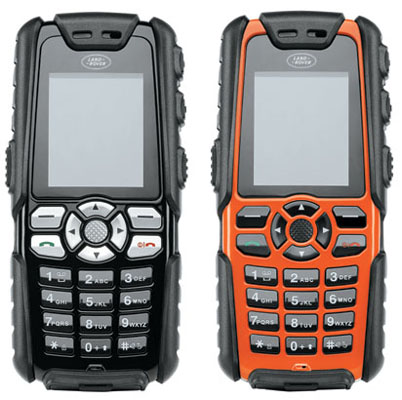
Sonim's S1 Land Rover phone: will work at down to -70°C?
During Sonim’s launch of its new S1 Land Rover phone in Birmingham yesterday, Sir Ranulph said that the firm’s currently “working hard” to ensure that the handset can survive icy temperatures as low as -70°C.
The S1 is currently 'only' guaranteed to work in conditions down to -20°C, but the explorer told Register Hardware that he’d like to take one of the handsets on his next expedition - provided that Sonim’s able to ensure the S1 will operate at even lower temperatures.
But frost, snow and severe windchill aren’t everyone’s cup of tea, so thankfully the Sonim S1 – as it currently stands – can also withstand the rigours of more mundane life.
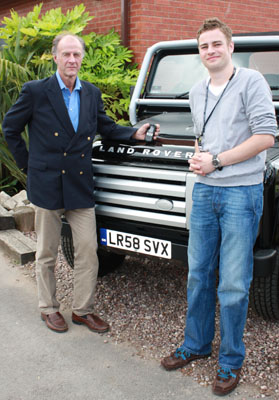
Explorer meets Vulture
For example, the phone will survive a 2m drop onto concrete, Sonim said, and remain operational after a 30-minute dunk in up to 1m of water.
The handset has a 2Mp camera, Assisted GPS and Bluetooth 2.0. The phone’s battery will provide 18 hours of talk time, Sonim claimed.
The Sonim S1 is available now in the UK, priced at around £300 ($492/€355). ®
Rugged Phone Reviews
COMMENTS
Or
Or you could get the Bear Grylls version that just has to work in a motel in Hawaii.
http://en.wikipedia.org/wiki/Bear_Grylls#Criticism
Problems
-70C is a bit pushing the envelope. The coldest temperatured in record has been in Vostok, antartice and that was -89.2C. So antarctic is one possible place for it, and it wouldnt surpirce me mutch if there were a gsm base stations in some of the expedition stations. The gsm can't be farther than about 30km from base station as that is the limit in the travel delay factor coded to the signal so you would have to stay fairly close to base station. You cant get past that limit with power or antennas.
Next possible place is Siberia where the temperature goes often close to -70C. In Canada the records are about -55C so not as cold as siberia. Both Canada and Siberia might have some coverage on mountains.
There are several problems with getting a phone working in those temperatures.
First batteries. Lithium and NiMH both work badly in cold, NiCd a bit better but not close enough in that temperature. Even lead-acid has trouble below -40. Sodium-hyroxide battery might work but dont think theres ever made one for that size.
Display. No LCD display works that low, even -20 makes them sluggish. Need to be led or electroluminence. Even them start to have trouble at those temperatures. Plasma would work best but kind of bulky for that use.
Transistors. Even them start to have trouble that low. Bias point changes with temperature and as there isnt that many uses for chips for extreme low temperatures all processors etc would have to be special made for this phone. Even the manufacturing process for these chips would have to be custom made.
Easiest way to do this, replace the regular battery with plutonium one. Works in cold temperatures and heats the electronics to working temperatures. Just have to make a temperature controlled cooling on it.
cold, but not that cold
-70 deg c is overkill, but -20 is not enough. There are plenty of places in the US and Canada with GSM coverage where temperatures are often in the -20 to -30 range (northern Minnesota, the prairies, Quebec, etc.)
Latitude wireless operates in the Yukon, NT, and Nunavut, but they use CDMA phones. It often gets to -30 or -40 in Tuktoyaktuk, Iqaluit, and Old Crow.
I've used my iPhone below -20, but I keep it in an inside pocket so the handset itself never gets that cold.
well
the phone might work at -70 but the battery sure as hell wont.
