


This article is more than 1 year old
Panasonic Lumix DMC-FS7
Stand-out performance?

Review The sub-£200 digital camera market is a cutthroat sector with big-name - and not so big name - companies launching a plethora of models that offer an impressive range of features and an even more impressive performance. In other words, if you want to be a winner, you’re going to have to offer something that’s just a little special.
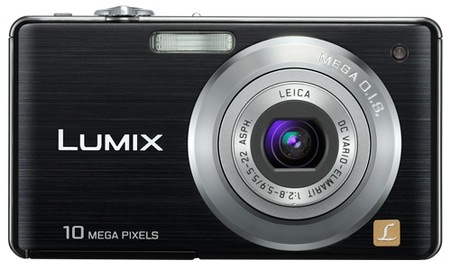
Panasonic's Lumix DMC-FS7: nice looks, good build quality
Enter Panasonic’s DMC-FS7, a model aimed at point-and-shooters with discerning taste.
At this price range, compromises have to be made, and different manufacturers have opted for different forms of compromise. For some, it’s about reducing the build the quality. You know the score: a plastic body with lots of plasticy bits.
But Panasonic has certainly not skimped on the DMC-FS7’s build quality. It not only looks lovely, but its brushed metal finish and raised Lumix moniker give it an air – and feel – of a quality product. The only slight letdown is the large LCD screen, which juts out from the back rather than lying flush, but we can live with that.
At the top is a small on/off power switch, shutter button, zoom rocker and tiny intelligent auto button. The back is dominated by a large 2.7in LCD screen composed of 230,000 dots, next to which are a play/record slider, mode button, four-way rocker control, display button, and quick menu/delete button.
At the right hand side is a small cover for the mini USB port, and at the bottom, the compartment for the battery SD/SDHC card. And that's your lot when it comes to nooks and crannies.
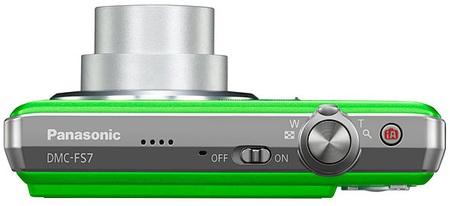
For the discerning point-and-shooter?
Feature-wise, the DMC-FS7 has a 1/2.5on CCD with 10.1 effective megapixels; a 4x optical zoom in the form of a 5.5-22mm f/2.8 Leica DC Vario-Elmarit lens equivalent to 33-132mm in the 35mm format; a top resolution of 3648 x 2736 pixels going down to 1920 x 1080; shutter speed range of 8-1/2000s; ISO range of 80-1600, with a high sensitivity range of 1600-6400; and AF metering for face, multi-point (nine-point) or one point.
 Biting the hand that feeds IT

