2008's top three compact cameras
Supreme small snappers
Kit of the Year Summer holidays and Christmas celebrations - the two times when we most want to take pictures. And, for many of us, nothing beats the convenience of a compact. So which small snappers got us excited this year?
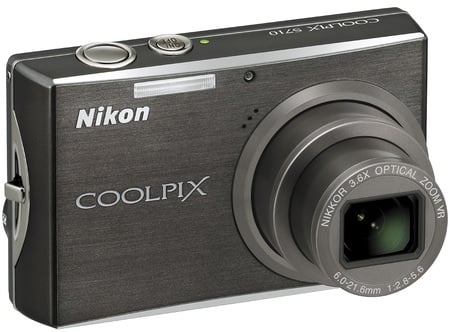
Nikon Coolpix S710

We're very impressed with this smart, little, 14.5-megapixel Nikon. It’s a nice size and weight, offers a good set of features, is easy to use, performs well - it has a very nice panorama mode - and it has some useful playback and editing features. It provides a decent range of manual controls. If you’re in the market for a compact that’s a cut above the rest, you should certainly check out this model.
Read the full review
Reg Rating 85%
Price £250 Find the best online price
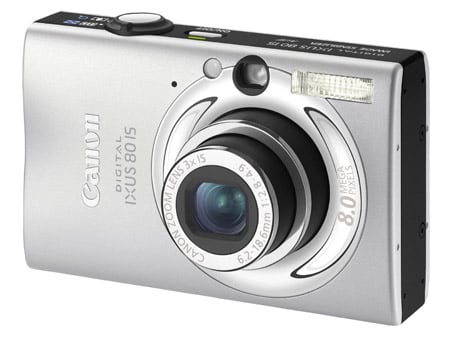
Canon Digital Ixus 80 IS

An eight-megapixel sensor may seem lightweight by the standards of the Nikon, but the Ixus 80 IS takes some rather nice pictures. Its 2.5in LCD is complemented with an optical viewfinder - increasingly rare on compacts as small as this one - and if it doesn't major on manual control, at least the automatics are competent. It's quick and looks snappy too.
Read the full review
Reg Rating 85%
Price £169 Find the best online price
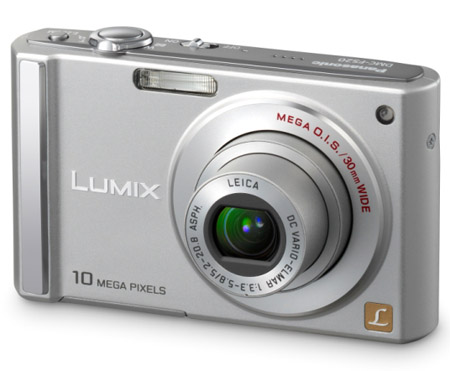
Panasonic Lumix DMC-FS20

We like Panasonic's ten-megapixel DMC-FS20 very much. It lacks some of the glitz of other models in a similar price range, has a few operating quirks and it doesn’t offer a great deal when it comes to manual control - it's designed to do everything but press the shutter button for you. But his is exactly what many digital camera owners are looking for. The next time you’re in the market for a digital camera, may we respectively suggest that, in addition to considering the usual suspects, you check out this Panasonic offering as well.
Read the full review
Reg Rating 85%
Price £180 Find the best online price
Best of the Rest
Olympus μ1010
80% Read the full review
Pentax Optio V20
75% Read the full review
Sony Cyber-shot DSC-T700
70% Read the full review
Kit of the Year 2008
Netbooks
MP3 players
Radios
COMMENTS
re which camera is quick?
Well Sir Runcible, you've hit the nail on the head - the one number missing in almost all reviews is the shutter lag. This is because most of the reviewers are techie nerds who don't buy cameras for their girlfriends or wives (or boyfriends) .... ;-)
I, however, had to buy my wife a digital camera recently(ish) when her 35mm compact finally crapped out. First I bought her a fancy one that got good marks in all reviews. She hated it. Almost all her pics came out blurred or with the kids heading out-of-frame. And she doesn't like to have to piss around with dials and buttons - she'd have been using my ancient SLR otherwise.
She wanted a new film camera. I couldn't find one (you try it - the alien conspiracy has got rid of yet another useful working device in favour of a harder to use one). While looking I managed to buy an 2nd hand fisher-price 35mm binocular viewfinder kids camera for our children - excellent value, much better than their new digital one, even 4 year-olds can take good pics with it.
Anyway, to cut a long story short, I found the URL below:
http://www.cameras.co.uk/html/shutter-lag-comparisons.cfm
And ended up buying a Canon Powershot which she likes. Her old bells-and-whistles digital camera will be on ebay soon.
-K
Re: I bet the Canon has no power level indicator
The LCD screen shots on
http://www.dpreview.com/reviews/canonsd1100is/page2.asp
clearly show a battery indicator, so should be nothing to worry about - though there's probably no alternative display should you choose to shoot with the LCD off, and it's not half as pretty as some of Samsung's.
By the way, the SD1100 and 80 are the same camera, just branded for different markets for reasons best known to Canon.
I bet the Canon has no power level indicator
Does this Ixus along with some or all of the other Ixus models also not have a battery level indicator? A small irritation which every reviewer strangely fails to mention, usually through incompetence. I had an Ixus 800 which I tossed after a few months because not knowing how much charge was left forced my to buy and carry around spares. I thought this was a one off oversight but a work colleague bought a recent model a few weeks ago and brought it in to play with. I asked did it have a power level indication and he was somewhat dismayed to find that it didn't. Again, you'll be hard pressed to find it mentioned in any reviews.
Would you buy a car without a petrol guage? So why do Canon think it's clever and desirable to omit a power level indicator? Bloody idiots.
Re: viewfinder differences
However, if the Canon's anything like ours, the accuracy of the optical viewfinder leaves a lot to be desired (erring on the side of capturing a lot more picture than expected, which is the better way to be inaccurate but is a waste of those increasingly poor quality megapixels), and this seems a pretty common problem on digital compacts. Another reason for dropping the optical 'finder is that as zoom lengths chase the megapixels, it becomes increasingly difficult to reflect that in the preview. Bigger superzooms tend to use electronic viewfinders to get as close to the best of both words as possible, and should have exactly 100% coverage.
Sheesh
Thank you for reminding me of how technology is often pushed backwards because of consumer driven marketing, in this case with respect to digital cameras. Marketing so effective that it becomes increasingly difficult, if not impossible, to persuade many people that MP count is but one of many factors, one that takes a distant back seat to sensor size. I'm glad to see how many commenters here get that, but the general public never had a chance.
Raw images off my old 1.2 MP Canon a50 still have superior quality to contemporary cameras with many times the resolution, yielding superb 4x6 prints that are indistinguishable (in terms of resolution - even hard to see with a loop) from my 8 MP a630 or or even my DSLR. Typically, on 4x6, the a50 actually outperforms the a630!
Another misused concept is that of image stabilization. Some cameras with increased image gain amplification to "achieve" higher "ISO" ratings are being touted as having this feature, which is technically incorrect, alongside other cameras that have far more superior optical stabilization. Either way, consumers are led to believe that stabilization will magically eliminate blur from most if not all shots, even from subjects in motion within the frame, when in reality stabilization of any kind can at best only deliver a bit over 2 stops extra latitude before image motion overtakes shutter speed to an objectionable degree.
Decreasing pixel density (say 3-6 MP on a 1/1.8" sensor) would yield several stops better exposure, and when combined with current processing technology would make possible compacts that completely blow today's crap out of the water.
Advertising could just as easily center on quantifiable standards for overall image quality, perhaps something akin to Imatest's, that would still differentiate cameras in order to sell them, but also give the consumer a solid rule of thumb for guiding purchase decisions. But the damage has already been done, and gets worse with time, so that such standards may not ultimately be accepted by the general consumer at all, or at least without considerable effort.
What was that about RMS watts?
-bart