
Polaroid PoGo handheld colour printer
Instant (almost) snaps from your digicam or phone
Review Weren’t Polaroid cameras fun? Now you can capture those days all over again, only with smaller, more expensive instant photos, using Polaroid’s new PoGo printer.
Although Polaroid’s original instant-picture technology has finally died a death, the PoGo, based on innovative technology from Zink, is intended for a similar role. The PoGo isn't much bigger than a pack of cards and produces 3 x 2in pictures, using no ink and no dye films, either.
The printer is small - just 120 x 72 x 24mm - cased in black with silver highlights, and slips easily into a pocket. Its Li-ion battery is good for around 15 prints, so the battery charger, with a similar volume to the printer, probably has to fill the other pocket. Tip: if you're travelling with a UK mains plug in your pocket, point the prongs outwards.
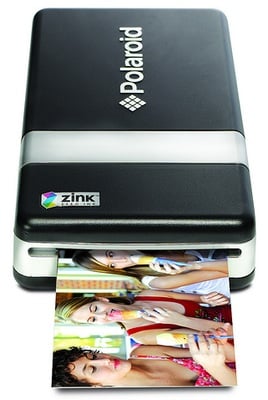
Polaroid's PoGo: probably the smallest colour printer in the world...
Set-up is dead simple. Flip up the top cover of the PoGo and slip in ten sheets of Zink - for 'zero ink', since you ask - paper. The printer can only take ten sheets at a time, and the 30-sheet packs contain three separate sachets, complete with a bar-coded, blue paper slip which automatically feeds out first and tells the printer you’ve reloaded it.
Snap the cover shut, power up by pressing the single button on the side and you’re ready to print. There are two ways of feeding image files to the PoGo: PictBridge and Bluetooth – there's no PC connection. As it only prints on 3 x 2 photo paper, it wouldn't be much use in that role, anyway.
COMMENTS
@Stike Vomit,
Aside from the genius use of not having to send racy snaps off to the photo developer, the Polaroid was largely used in (amazingly enough) the professional studio photography realm back in the film days. Many professional cameras (such as the Mamiya RZ67) had interchangeable backs--one of which would hold medium format film (6x6, 6x7, etc) and another would be a Polaroid back. The polaroids would be used to check exposure, framing, etc, before the final shot was taken on "real" film. This was usually kind of a crapshoot however because of the poor performance of Polaroid film, but it was better than nothing. There are still some applications, for instance google for Joe McNally's "Faces of Ground Zero" project.
I don't have any polaroid backs any longer because I test with a digital SLR before committing to film, but I do still have a couple consumer Polaroid cameras; there's a primitive aesthetic to the system that's occasionally appealing. The film is unfortunately becoming very difficult to come by (being discontinued).
As for the reviewed printer itself--it seems a rather spectacular waste of money. There's no professional use for it, and if I wanted crap quality prints with the mates I'd run down to a photobooth.
So basically...
...it's an expensive, practically useless piece of junk which doesn't even produce acceptable print quality. And it's SLOW -- one stamp per minute as opposed to three standard-sized pictures from a compact thermo printer that costs the same and is every bit as portable.
FAIL.
@Bad Beaver
a) Wasteful? How do you work that out?
With an inkjet printer, even if you refill the cartridges, you have the cartridge ending up in landfill or using energy to be disassembled and recycled at the end of its life. With dye sub film printers (like Canon's SELPHY range), you have the film and dye, much of which is left on its carrier film and binned. The ZINK technology is completely self-contained in the paper. There's no wastage at all.
c) You're not comparing like with like. You can, of course, share images around electronically, but we're looking at a device for somebody who wants images on paper. You could level the comment at all printers, but its unfair to single out this particular one.
b) and d) Agreed.
Boring
I would have expected a review to sport at least one or two pictures of "real world" results instead of just promotion shots.
Zinc has several problems.
a) it is wasteful
b) it is expensive
c) it is easily substituted by sharing around digital data via bluetooth or e-mail
d) the quality sucks
...
I find the small size especially unappealing. A Polaroid, as mediocre as the overall quality may be, comes with an aesthetic white frame as standard which also provides room for information, while the Zinc paper looks as though it came from inside a bubble gum wrapper.
Heh
"The second way of connecting the Pogo printer – and, we suspect, the one more likely to be used – is over Bluetooth from a mobile phone"
Whoopie, now instead of taking a picture of my ass with a friends camera phone, setting as their wall paper I can bluejack their printer and print snaps of it as well.
/Mines the one with the antenna sticking out of the pocket
