The Register® — Biting the hand that feeds IT

Feeds

New Van Gogh pic discovered using German atom-smasher

Mysterious 'Doris' lurks beneath 'Patch of Grass'

Cloud based data management

There may be some readers out there who aren't entirely clear just what synchrotrons - enormous, kilometre-wide magnetic doughnuts used to thrash electrons within an inch of their lives - are actually for. Today, the news furnishes us with a partial answer - you can use a synchrotron to see old paintings hidden beneath other paintings.
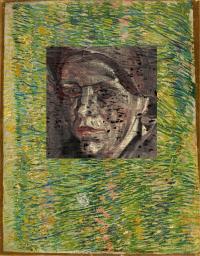
The previously unknown Van Gogh portrait beneath 'Patch of Grass'

'Patch of Grass' - or actually just a
particularly vigorous bit of Tippex-ing?

This has now been conclusively demonstrated by boffins from Belgium and the Netherlands, who have used an immense German synchrotron to peer beneath the surface of the noted Van Gogh painting "Patch of Grass". By lighting the pic up with special extra-lively X-rays from "radiation source DORIS at Deutsches Elektronen-Synchrotron DESY in Hamburg", the spyray art-fancying brainboxes were able to expose a portrait of an unknown woman.

It isn't known what Van Gogh called the underlying painting, or indeed who it depicted, but we suggest that the subject might be codenamed "Doris" after the machinery which brought her to public view after a century of obscurity.

According to the Technical University of Delft, art historian Dr Joris Dik believes that the synchrotron X-ray demo will "pave the way for research into many other concealed paintings". We here on the Reg crypto-pic spyray desk expect to see a strong comeback of some sort from rival T-ray art-sniffer boffins, angered by the new school of synchrotron pic-probe upstarts.

Meanwhile there will no doubt be some grumblers who feel that, while an unknown Van Gogh picture is very nice, it may not quite provide total justification for the costs of building and running synchrotrons. The expenses of the UK's "Diamond" particle-punisher, and similar "big science" projects, have lately been blamed for a funding crisis in British physics and astronomy which has seen swarms of top boffins lose their jobs. ®

SaaS data loss: The problem you didn’t know you had

Latest Comments

@Andrew Kaluzniacki

AFAIK the jury is still out on what part magnetism plays in memory and/or brain functioning. If memory is based (at least partly) on magnetism then generating strong magnetic fields in the brain might corrupt memory. The worst part is the poor person probably wouldn't even notice (unless the corruption was so bad they got diagnosed with some form of amnesia). In any case you won't find me turning my head in any strong magnets.

0
0

Unnecessary fuss over re-using canvas

In my previous job as Delphi developer, I frequently redrew images on the same canvas.

0
0
Anonymous Coward

big words

Hmmm... you used "synchrotron" but not "palimpsest". I'm only moderately disappointed, though...

0
0

More from The Register

New material enables 1,000-meter super-skyscrapers
Before you read on, see if you can guess how the new stuff will be used
Boffins build headless robo-kitties
Soft kitty, warm kitty, cuddly little ball of wire kitty
 breaking news
Latest NASA ASTRONAUT class is HALF FEMALE
Newbie 'nauts include lady Marine fighter pilot, male doctor
 breaking news
You've seen the Large Hadron Collider. Now comes the HUGE Hadron Collider
International Linear Collider ready to rock and roll
Boffins find evidence Atlantic Ocean has started closing
'Embryonic subduction zone' that flattened Lisbon headed for Blighty
Google launches broadband balloons, radio astronomy frets
A careless Loon could blind the square kilometre array
Hubble spies unlikely planet being born in hostile neighborhood
Hoovering a cloud of sand 7.5 billion miles from a tiny star
House bill: 'Hey NASA, that asteroid retrieval plan? Fuggedaboutit'
Republican-led committee also swings budget axe at climate science
 breaking news
Jaguar to open new car-making factory in Blighty (virtually)
Britain still makes stuff, it's just not real any more...
 breaking news
Spin doctors brazenly fiddle with tiny bits in front of the neighbours
Quantum computer address bus just nanometres wide