VIA takes tiny mobo spec to second generation
Mini-ITX 2.0 launched
Computex VIA has launched the second generation of its Mini-ITX micro motherboard form-factor.
Mini-ITX 2.0 retains the 17 x 17cm size of its predecessor, but now mandates a chipset capable of hosting a PCI Express x16 slot for a graphics card. The chipset should have sufficient integrated graphical horsepower to handle DirectX 9 graphics - the add-in slot's present for folk who want DirectX 10.
Naturally, VIA hopes mobo makers and DIY PC folk will opt, respectively, for its own system chippery and CPU technology, such as - it said wherever possible - its Nano processor.
And since VIA's pals with Nvidia at the moment, how about a GeForce to fill that PCIe slot, sir?
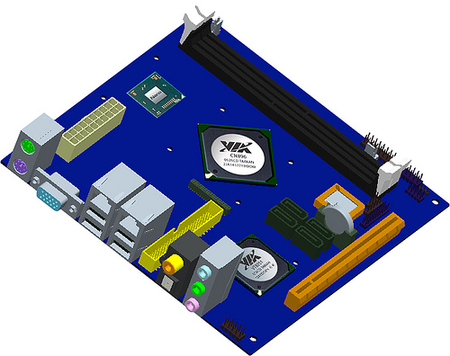
VIA's vision of Mini-ITX 2.0
VIA's spec calls for a VGA port on the board, with HDMI delivered by the add-in card. What, no DisplayPort? HD sound is part of the spec too, with a trio of audio connectors for multi-channel output.
The board should provide two 3Gb/s SATA drives ports and a parallel ATA connector, plus Gigabit Ethernet and at least four USB 2.0 ports. The mobo should allow up to 2GB of DDR 2 memory to be installed.
VIA said it expects to see Mini-ITX motherboards on store shelves in Q4.
COMMENTS
Too Big?
Then you want to get yourself a Via PicoITX board ... perhaps like the one in Via's ARTiGO PC: 1GHz CPU, integrated SXGA graphics, 1GB RAM, 4 x USB, 1 x IDE, HD Audio, 100mbps network, VGA/DVI out (serial optional).
I'd argue that 4 x USB is the absolute minimum - less than that and you'll run into issues connecting keyboards, mice, cameras, GPS, controllers, robots, etc.
See "Assembling an Artigo Pico-ITX device" (http://www.bitcrazed.com/2008/05/26/AssemblingAnArtigoPicoITXDevice.aspx) for more details and photos.
Too big for a home server
There are far better boards out there for building DIY appliances, for example the Soekris and PCengines boards. They are smaller and extremely low power. No unnecessary stuff like video etc, thus less space, less power consumption. The newest boards have the AMD Geode LX800, which runs at 500 MHz but is roughly equivalent to a Pentium III clocked at 800 MHz and consumes less than 5W peak. That's the kind of thing you want for an appliance. The VIA boards are OK for desktops and kiosk terminals, but for servers they are not that great.
Home server
For any home user who wants a small server, but doesn't want to use much power, this looks good. onboard Gigabit Ethernet and multiple SATA ports make it "Via"ble. Dedicated to serving a few files and Email for a family doesn't need a fast CPU, even doing software RAID. How's the Linux support?
Um - did I misread?
"VIA's spec calls for a VGA port on the board, with HDMI delivered by the add-in card. What, no DisplayPort? HD sound is part of the spec too, with a trio of audio connectors for multi-channel output."
So it gets HDMI via an addon card - HDMI = DVI + audio, so we've got DVI covered.
"The board should provide two 3Gb/s SATA drives ports and a parallel ATA connector, plus Gigabit Ethernet and at least four USB 2.0 ports. The mobo should allow up to 2GB of DDR 2 memory to be installed."
Should allow up to 2GB, may allow more - this isn't a top limit, looks like a bottom limit to me - Must provide up to 2GB...
Sound like nice boards, let's hope they run decent fanless CPUS in there...
