


This article is more than 1 year old
Satellite sea launch successful
Promise of improved comms in Asia Pacific

The Thuraya-3 mobile voice and data services satellite has been successfully entered geosynchronous transfer orbit after having launched from the Oydessy Pacific Ocean rocket platform.
A Zenit-3SL rocket carrying the 5,173kg, Boeing-built satellite took off at 3:49am PST from a location on the equator on a mission to put a communications satellite for Abu Dhabi-based Thuraya Telecommunications into orbit.
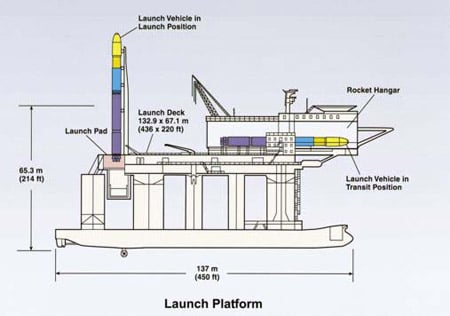
Oydessy Pacific Ocean rocket platform
The first attempt to launch the satellite in November was scuppered due to unusually strong currents that affected the floating launch platform. The Oydessy and the launch command ship had to return to home port in Long Beach, California to resupply and then sail back to the launch location, 154 degrees west longitude.
The Sea Launch system is designed to take advantage of physics that allow a rocket launched from the equator to carry a heavier payload into orbit than it could if the launch point was anywhere else on the Earth's surface.
With a designed lifetime of 12.5 years, the satellite has been positioned in orbit, 35,786 km (22,236 miles) above the Earth. ®
 Biting the hand that feeds IT

