


This article is more than 1 year old
Nigerian keyboard firm sues One Laptop per Child
No hugs and kisses for XO Laptop

The One Laptop Per Child foundation is being sued over its XO laptop keyboard design by the Nigerian-owned, Massachusetts-based firm, Lagos Analysis Corp.
Lagos claims the non-profit illegally reverse-engineered their software drivers to make the OLPC keypad more accent mark friendly to foreign fingers.
The initial copyright infringement suit has been filed in Nigeria, and the company plans to press further lawsuits in countries where the OLPC laptop is being vended.
Lagos CEO Adé G. Oyegbọla tells El Reg that the company's Konyin Multilingual Keyboard features four shift keys and a software driver specialized to more easily reproduce the uncommon accent marks found in Nigerian languages and dialects. Such diacritic ticks can be unwieldy in traditional keyboards, but are often essential to getting the right message through. (For example, Oyegbọla explains, without the dot below the "o" in Lagos CTO O. Walter Olúwọlé's name, the meaning becomes "God destroys the house).
Oyegbọla claims that Nicholas Negroponte, the Massachusetts Institute of Technology professor who founded the OLPC foundation, purchased two of the company's keyboards in 2006 and used them to reverse-engineer its keyboard technology. Negroponte is also named in the lawsuit.
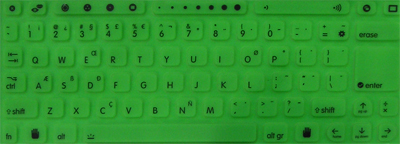
OLPC keyboard
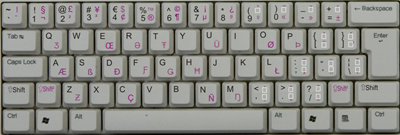
Lagos keyboard
Although the OLPC keyboard lacks the quartet of shifters found on the Lagos board, Oyegbọla claims the exact functionality of the "shift2" button was mapped to the XO's "alt gr."
OLPC apparently hasn't been served by the papers, and is only responding statement-style:
"One Laptop per Child, a non-profit educational organization, has hear that Lagos Analysis Corp. (LANCOR) has sued OLPC in Nigeria, but OLPC has not seen any legal papers related to the alleged suit at this time," said Robert Fadel, the OLPC Foundation's director of finance and operations. "OLPC has the utmost respect for the rights of intellectual property owners. To OLPC's knowledge, all of the intellectual property used in the XO Laptop is either owned by OLPC or properly licensed. Until we have a copy of the claim and have had time to review it, we will not be commenting further on the matter." ®
 Biting the hand that feeds IT

